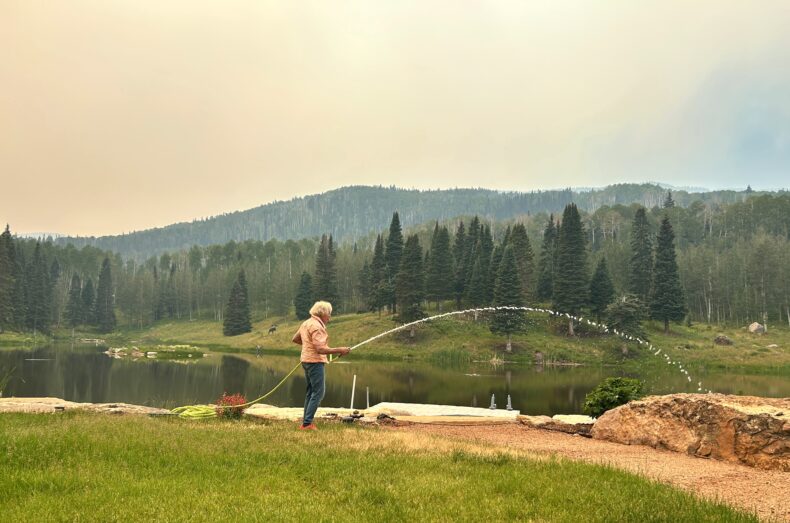
My mom watering her flowers as a wildfire approaches
I’m helping my mom evacuate, the air getting harder to breathe in this charred perfume, 23 square miles of conifers and oakbrush gone up in flames several miles away. Last report, the fire was about to crest the ridge at 10,000 feet where the front line is being slurried and fought with trenches and hand tools. It’s called the Gold Mountain Fire, started four days ago outside of Ouray, Colorado, from powerlines downed in a windstorm. That wind hasn’t let up. Ash twirls down on us like snow.
My mom and I carry out furniture she built, heavy oak productions that we load in our two trucks, plus my stepdad’s laptop, a Navajo rug, and a copper bucket containing a box of matches, anything that just can’t be replaced.
Hold up, I say to the copper bucket and its matches. Why are we taking this?
My mom puzzles the question. She looks exhausted. She says, In case it gets so hot in the house they light.
If it’s that hot, it’s too late.
I think she’s gotten four hours sleep in the last two nights, and she’s 80, and like feathers of mascara, ashes have landed on her cheeks and shoulders. My stepdad would be here but he had surgery yesterday and is down at their place in town recovering.
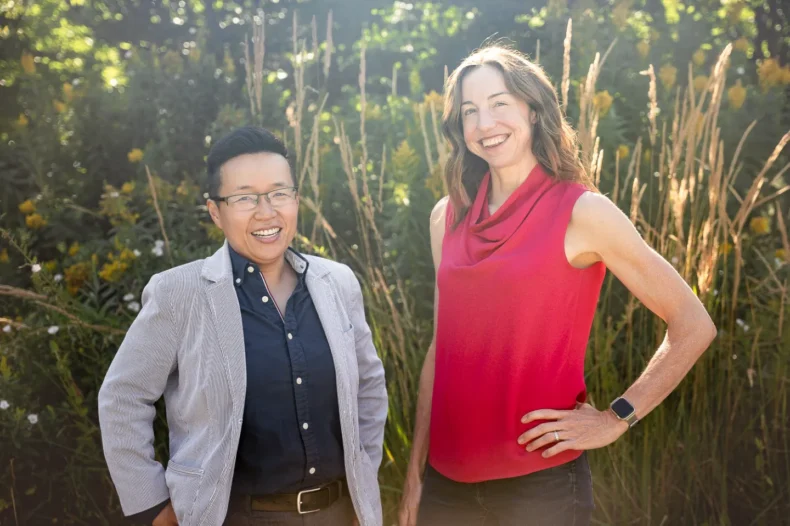
Co-Authors Dr. Jiaying Zhao and Dr. Elizabeth Dunn
I’ve been following Liz Dunn’s happiness research for a while, and now she has co-written a new book, Leave the Lights On: How Joyful Decisions Can Save Our Species (Penguin Random House), about how joy could be the missing weapon in our fight against climate change. Here we sit down for a Q&A about her work.
Jessa: So you and Jiaying Zhao, colleagues at University of British Columbia, have co-written a book. What are your respective research foci and how do they fit together in this collaboration?
Liz: I’m a happiness researcher, and my work focuses on how to optimize our use of resources to maximize happiness. So time, money, technology—I studied AI and smartphones and things like that, and then I got interested in carbon as another one of these. In this case, we don’t want to create too much of it. JZ is one of the world’s leading experts on the behavioural side of climate change. So, how do we change human behaviour in a way that tackles climate change.
Our two specialties are usually on opposite sides of the room—we do not find ourselves next to each other at a cocktail party. But in this case, bringing our almost non-overlapping areas of expertise together has been really powerful. It creates dual lenses so we can find the sweet spot between having a genuine impact on climate change and what makes people happier.
Jessa: One of the concepts in the book that really rang true for me was hedonic adaptation. What people think will make them happy only does up to a point. How does that manifest in our daily lives?
Liz: Yeah, so hedonic adaptation is like the gravity of happiness research—it keeps us from floating away with joy. Whatever happens to us in life, we tend to adapt to it. That’s good because we are pretty good at recovering from bad things, but we also recover from good ones. Somebody from the Renaissance would be blown away by the comforts and conveniences of our daily lives, but we don’t walk around marveling at them. We get used to them.
This is important for thinking about climate change, because it can be tempting to overconsume, ratcheting up our desires and feeling like we need more. The mistake we make is thinking the 10th pair of designer shoes will give us the same level of pleasure the first one did.
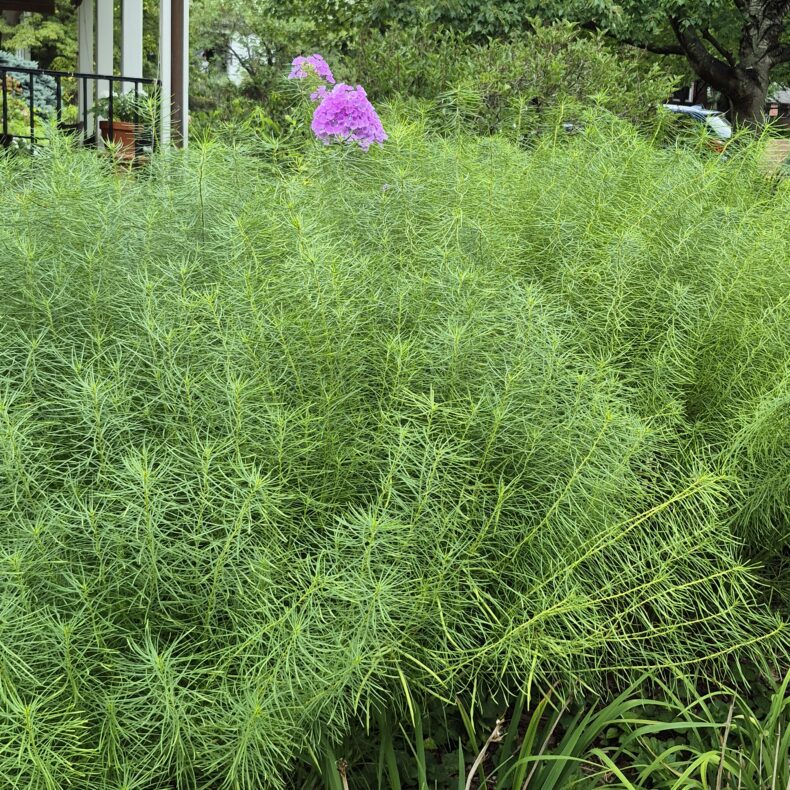
Three years ago I wrote a post about boundary conditions, those irrevocabilities that set limits on our lives. (You don’t like having limits? you want to negotiate limits? too bad. Boundary conditions like uncertainty and change, for instance, you want security? too bad; you want to make plans? too bad. Or old age, too bad; and of course death comes to mind.) Anyway, I illustrated that post with an errant phlox that just showed up in the amsonia, that seemed to be a sign of something good. That phlox: even with all the non-negotiable boundary conditions, boink! here I am anyway!
Anyway, today, after a few days of staying inside because the smoke-soaked air came with excited public health warnings, I went outside. The air was better, not green yet but yellow and at least not orange let alone purple. So I walked around the garden, looked at the amsonia, and boink, there was the phlox again, only not just one phlox but two. The phlox had doubled. What could this mean? Was it good? It seemed good.
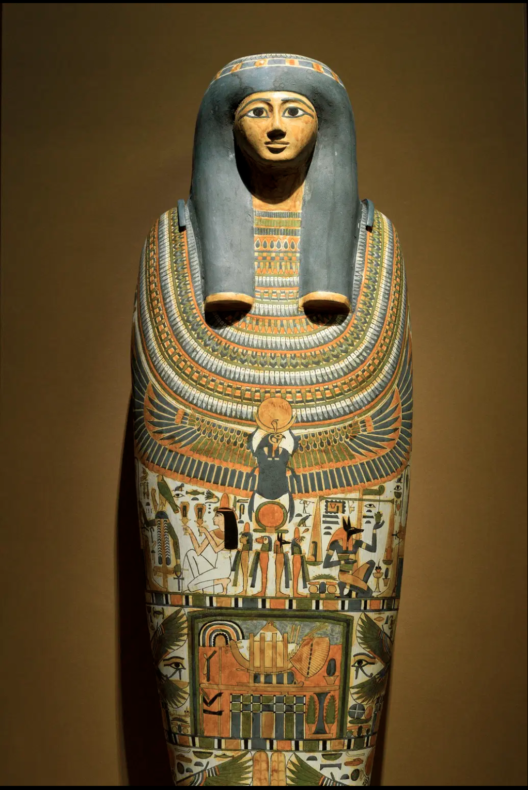
The cartonnage of Gautseshenu, ca. 945–712 B.C.E. Image by the Brooklyn Museum.
In the Egyptian wing of the Brooklyn Museum my young son stands before a beautiful coffin containing the body of woman named Gautseshenu. Her name means “bouquet of lotuses,” though neither of us can pronounce it. After a couple bumbling tries we stop, me out of embarrassment and him because her name is not the point, and the whole idea here is still so very, very strange.
How old? he asks again.
Almost 3,000 years, I say.
And how old am I?
He knows. He’s just checking against a void of time he can feel but make no sense of. The numbers, after all, mean nothing. Nor do the dynasties, the stories of the gods, the practical matters of corpse conservation. Some much more fundamental attraction is unfolding, and it’s linked to this: just beyond a few layers of linen, gesso, and paint, is a body. And just beyond that is the world of the dead. I’ve now watched this odd magic work its irresistible charm on both this son and his older brother—as well as hundreds of other kids who’ve stood beside us at various museums, staring at the mummies and tapping on the glass, weekend after weekend, year after year.
A couple of decades ago Gautseshenu and other mummies here in Brooklyn were pulled from their galleries and returned to storage, away from the view of visitors. According to the museum’s web site, it had something to do with respect, or at least a reconsideration of what we think we’re trying to accomplish when we put the old dead on display. The mummies have been back for many years, though, and there have even been some relatively new discoveries made from them: at least two of the Brooklyn mummies were long mis-gendered as women, and are today—after CT scans—understood to be men.
There is also now a quiet acknowledgment in the gallery of the fact that so puzzles and fascinates my sons: rich and exotic as they appear, colorful as carnival prizes, inside each of these packages are the remains of an actual person. Someone who assumed (or at least hoped) that after death they would spend eternity undisturbed. A sign at the entrance to the mummy chamber asks you to remember this, but my son, only 5, cannot yet read.
And yet it comes up. I’ve actually found questions about dignity and propriety to be among the first kids ask about the dead-on-display—once they get past the goosebumps. Years ago at the Met my eldest son paused, stood up from his examination of a mummy, and said, Why are they here? Did they know they would be? Now, before Gautseshenu, my middle son wants to know, Where is her family? Each question, in its way, is about belonging, but also consent—something we may never ask of the old dead.
For a while on this late Saturday morning my son and I have the gallery nearly to ourselves. He wants to race to the mummies, to blast thought centuries and get to them. I try to slow him down, pull him toward statues and jewelry, scarabs and sphinxes. But there’s no tempering the allure of death, and soon we’re in the mummy chamber.
Here, he learns to identify Anubis, Osiris, Horus, heavy-hitters of the Egyptian pantheon, and moves from object to object, sarcophagus to cartonnage, finding them easily. Against the glass of the cases he traces hieroglyphs. And he squints skeptically at the eye painted on some of the coffins, through which the dead were believed to see: a kind of window onto the world they were leaving behind.
Can they really see us? he asks.
Silently I think, I hope not. Out loud I just say, Maybe.
He takes a step or two back, measuring the distance again between himself and the dead. Then, before he bounds away, he holds up a finger and wags it the mummy, as if to say, Oh no you don’t.
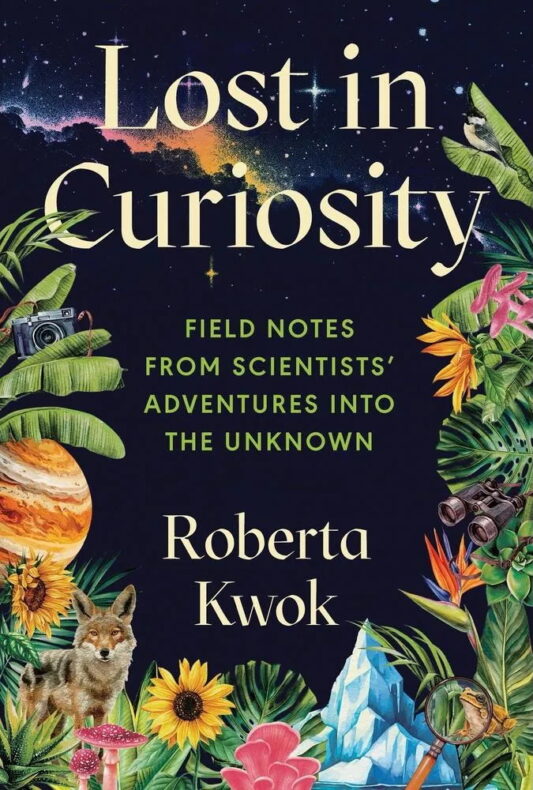
Roberta Kwok wrote for The Last Word on Nothing for several years — and once a Person of LWON, always a Person of LWON. Her first book, Lost in Curiosity, comes out on July 21. It’s filled with stories of the ups and downs of astronomers, physicists, frog biologists, and more (read on to find out which chapter got its start as an LWON post).
Indie booksellers have already been celebrating Roberta’s writing, and we want to celebrate, too! Here’s an interview with Roberta about her fabulous new book.
*
Cameron: How did the idea for the book come about?
Roberta: It’s hard to believe, but the seed for this book was planted 20 years ago. I was an MFA student in creative writing at Indiana University Bloomington, and I decided to write an essay about a scientist friend, Ben Blackman, who studied sunflowers. As part of the reporting, I followed him on a 20-hour lab experiment collecting leaf samples every few hours. And what struck me was how many things went wrong; most critically, at the 11pm and 3am timepoints, Ben discovered that some lights weren’t configured correctly, and all the samples we’d just laboriously collected might be useless. But he seemed to see this state of affairs as pretty normal and was ready to re-do the entire experiment. (Meanwhile, I was exhausted because I never stayed up this late.)
About 12 years later, I thought that maybe I could write a book exploring that theme — the hidden human struggles, failures, and uncertainty behind scientific discoveries, or the opposite of a Eureka moment. I loved narrative science books like Lab Girl and Owls of the Eastern Ice, where researchers told stories of the obstacles they’d faced and overcome. I wanted to take that idea a step further by following a research project from a different field in each chapter, creating a sort of tapestry of science. The vision was that the book could show science as a massive collective enterprise driven by the tiny steps — forward, and often backward — that individual scientists take.
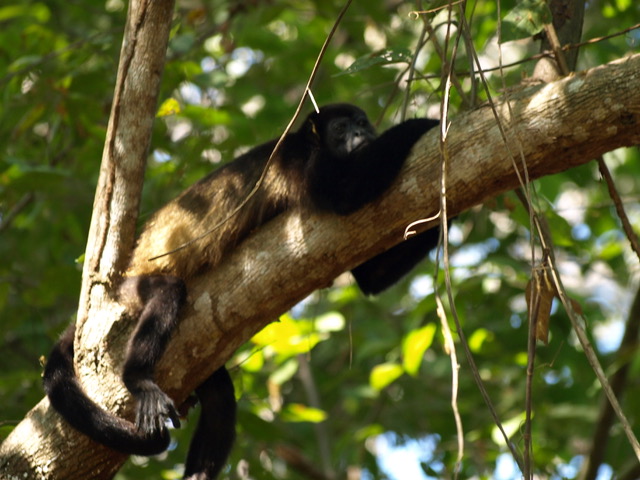
The letter Q evolved from a hieroglyph of a monkey. The Q’s tail is a monkey’s tail.
The best acronym, in this our golden age of acronyms, is TIL, for Today I Learned. I love it. People use #TIL as a hashtag on social media, but not to show off. It doesn’t mean “I know something you don’t know, nyah-nyah-nyah-nyah-nyah.” It means here’s something I just learned, and it’s delightful, and I’d like to share it with you. It’s humble. It’s generous. TIL is the opposite of smug.
TIL names that distinct burst of joy you get when you learn something you’re happy to know. It’s a way to mark that moment, to recognize that life is enriched by this new word or stray fact. It’s why trivia night at a brewpub is so much fun. It’s great when you know the answer to a trivia question, especially when it’s something you didn’t know you knew. (In what fictional county was the TV show “Hee Haw” set? Cornfield County (although they spell it with Ks, which is unfortunate).) The irritation of missing a question is balanced by the opportunity to learn from it. Did you know baseball players use a modified bat to pop up fly balls so their teammates can practice fielding? And it has a name? It’s called a “fungo.” (Thanks, Pourhouse Trivia.)
There’s an XKCD comic about TIL (because there is always an XKCD comic). If “everyone knows” something, Randall Munroe calculates, at least 10,000 people are learning it new every day. You can learn a lot from comics! This week I learned from Rosemary Mosco’s Bird and Moon that most rabbits nest under leaves, not in a burrow.
I’m using the T in TIL loosely in this post, to cover things I’ve learned in the past weeks or months, but today (literally today) I learned that TIL is more precisely an an initialism, and not a classic acronym, which is a spoken word formed from initials, like NASA or FUBAR. I bet a lot of you knew that already. That’s one reason TIL contains multitudes: It reveal weakness and trusts you not to gloat.
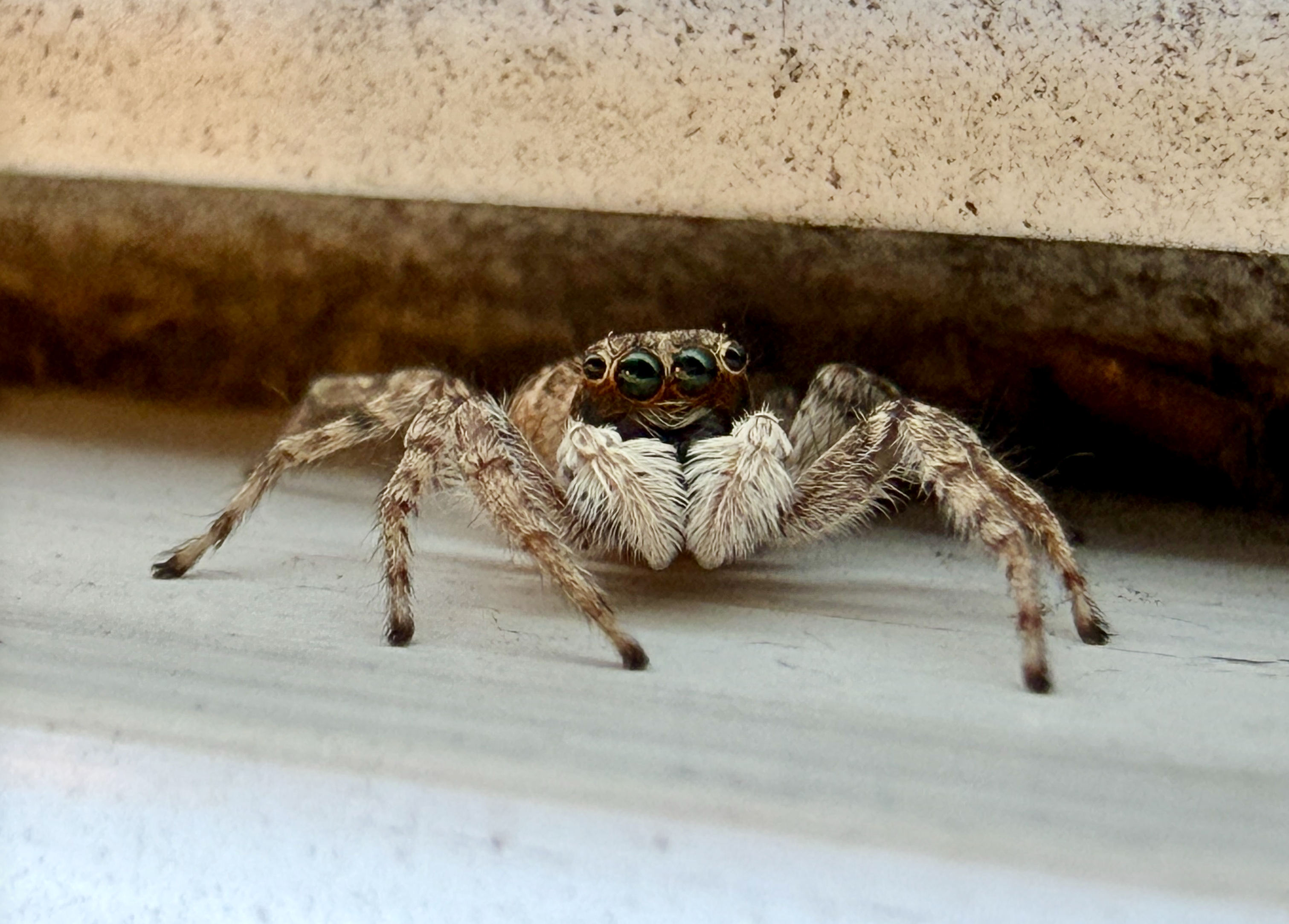
Jumping spiders can see as well as house cats — despite being less than 10mm long in most cases. I find this astounding, but people almost never seem as impressed as I think they should be when I tell them this. Perhaps they don’t believe it could be true.
It is, though. Scientists have measured these spiders’ spatial acuity, and it is on par with cats, pigeons, and elephants. Let that sink in for a moment. Jumping spiders can comfortably fit on your fingernail, while elephants are around 80 times bigger than you are.
As I reported a few years back for Science News, your own visual acuity is only around five or ten times better than a jumping spider’s. “Given that you can fit a lot of spiders in one single human eyeball, that is pretty remarkable,” animal behavior researcher Ximena Nelson, who studies jumping spiders at the University of Canterbury in Christchurch, New Zealand, told me. “In terms of size-for-size, there’s just no comparison whatsoever to the type of spatial acuity that jumping spider eyes can achieve.”
That incredible eyesight evolved for a purpose: hunting. Jumping spiders do not build webs and sit around all night waiting for prey to become ensnared. They are out in the daytime hunting flies and other insects. And this brings us to another way these tiny arachnids are like cats.
This first ran September 24, 2015; since then I have stopped going to that coffeeshop and no longer see Larry and John, its chief scientists, and in fact I hardly remember what they looked like and the coffeeshop moved anyway. Time is an illusion, you say? not when so much stuff undeniably happens in it; it’s real and it’s coming after you.
Anyway, this all reminds me of a story I’m working on in which a bunch of more or less ordinary guys track the satellites that the military keeps secret; the guys are out in their backyards or apartment balconies using binoculars and stopwatches. And that reminds me that citizen science is real and flourishing; and that I think people are natively scientists, they’re born scientists, that people do science the way they breathe.
Somewhere in the deep pits of my mind, I still think of “scientists” as remote people whose sentences I won’t understand, and of “science” as an incomprehensible body of knowledge I have to memorize. This is probably also the public’s image of science. But if 1000 years as a science writer have taught me nothing else, it’s 1) that science is the way people think when they’re admiring their worlds, when they’re thinking of explanations of their worlds that they can most reliably believe. And 2) that scientists are just specially-educated versions of the guys in the coffee shops.
§
On the way into my usual coffee shop this morning, I looked at the nice crossing guard across the street. She saw that I looked at her and waved. I wondered how she knew I was looking at her. The coffee shop was too noisy to concentrate on my magazines, so I asked John and Larry about the crossing guard. Why can people too far away to see your eyeballs know that you’re looking at them? John and Larry are regulars who leave right at 8:00; they’re always dressed for the weekend. “Maybe you stop moving your head,” said John, supplying the hypothesis. “Maybe having your head still and facing one way is noticeable.” “I think that’s right,” said Larry, supplying possible evidence that could back the hypothesis or not. “Look at cats. Look at people looking at something you can’t see but now you want to and you look too.”
§
The women in the coffee shop over by the window use their outdoor voices and sitting across the small room from them, I can hear every word they say whether I want to or not and I never want to. They’re always like this. My hypothesis: the women are trying to impress each other or are competing so they’re playing for an audience. I politely wait until the women leave, then I tell Larry and John my hypothesis but they don’t think much of it; they’re not into the psychology of the individual. Instead they see I have a problem and figure out their own hypothesis: I’m distracted by conversation. John’s office doesn’t have cubicles, he says, it’s open, and “pink noise” works. So he has a theory you could test: “What hooks you into somebody’s conversation is the rhythms of the sentences,” he says, “and if enough people are talking that the sentences overlap and you don’t hear a rhythm, you can ignore it.”
§
One regular is open about the psychoses he lives with. He knows everybody’s name – “Hello, Ann,” he always says — and seems to appreciate the coffee shop for its company, its social reassurance. Once when he went off his meds and the counter kids couldn’t figure out how to calm him down and get him help, they called the cops, and the cops came in like thunder, throwing the tables out of the way; and another regular walked in and assessed the scene about to go lethal, and said, “Hey, man! Let’s go to the hospital!” so they quietly did. A couple weeks later, two game-designers in the coffee shop were talking about this regular. “He says he’s moving up to Pennsylvania,” says one young game-designer. “I think he needs a regular community. How is he going to find a regular community like this?” The other game designer didn’t have an answer. But a testable hypothesis, or at least as testable as any social science gets.
§
The regulars are amateurs compared to the little neighbor kid, aged 5 or 6, who lives across the street. She’s walking barefoot on the conglomerate sidewalk, paying attention to every step. “Mama,” she says, “these bumps on the sidewalk. How does my brain know about these bumps in the sidewalk? My toes feel them. But how do my toes tell my brain? How does my brain know what my body is doing?”
And my favorite: a two-year old’s older brother was talking to a neighbor about rocks. The neighbor said she had a piece of lava in her living room, did the boy want to see it? The two-year old, whose speech was just developing and who talked as though he were learning a foreign language, interrupted the neighbor and asked, “Do. You. Have. A. Volcano. In. Your. House?”
§
See? A scientific inference based on previous knowledge; scientific questions with evidence and believable answers or not. I’m not saying these people are doing science, only that they’re thinking like scientists, asking questions and proposing answers that could be turned into science. I’m saying that if you want to know the origins of science, you can just hang around coffee shops and conglomerate sidewalks and houses that may well have volcanoes in them.
__________
Photos came from Flickr and the links no longer work and I can’t find them. I apologize to the photographers who obviously take charming pictures of curious people.