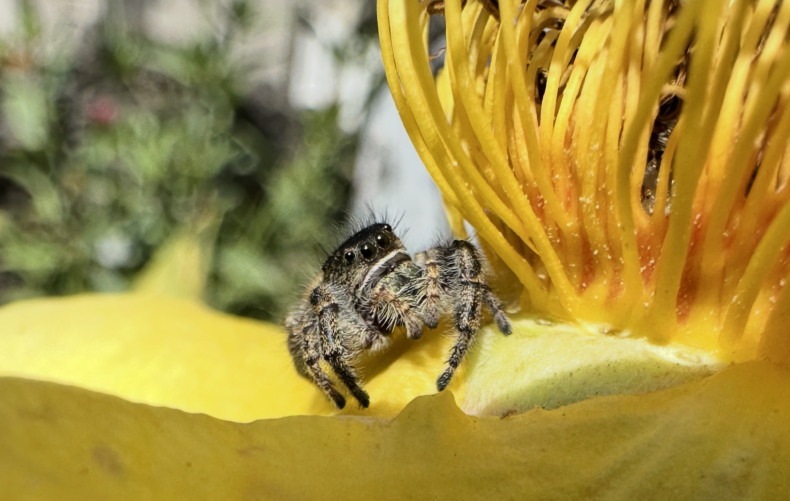
Over the last decade as my obsession with jumping spiders has grown, I’ve often wondered why some most people hate spiders. What is it about spiders that makes them particularly aversive? At first I was mostly just curious, but my conversations with arachnologists convinced me this question is actually important. Many researchers struggle to find funding to study spiders, which some of them attribute, at least in part, to the fact that people don’t like spiders. People are the ones deciding which studies get funded, as well as which animals are worth conserving and protecting. This is bad news for spiders.
So figuring out why people feel this way is a worthy goal. A couple years ago I wrote an essay for Knowable Magazine arguing that part of the problem is our lack of knowledge about spiders, which is partly the fault of this anti-spider bias in research funding, which is partly the fault of our lack of knowledge. I suggested we need something like the Backyard Bird Count for spiders which would serve the dual purposes of generating data about spider populations while helping people get to know these animals better — and hopefully fear them less. In researching that essay, I found only a few relevant studies looking into why people dislike spiders, along with a lot of speculation on the topic.
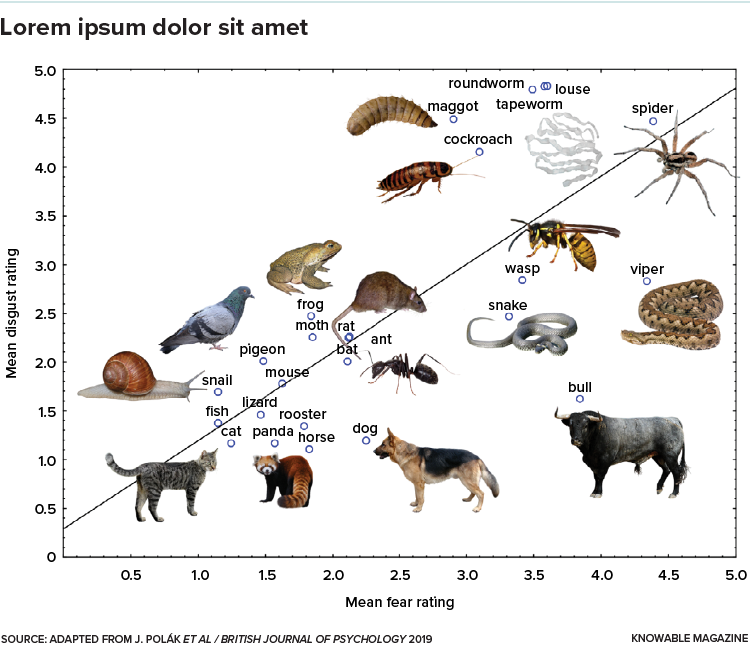
One study confirmed that spiders are in fact among the most reviled species, scoring near the top for both fear and disgust and beating out cockroaches, rats, wasps, and snakes — making them the worst combination of gross and scary. I found a study suggesting that we actually have a “spider-like cognitive category,” driving this response. Because only around 0.5 percent of spider species pose any threat to humans, the authors pinned the blame for this cognitive bias on scorpions, of which 23 percent are potentially dangerous — making them a more reasonable animal to fear.
Many characteristics of spiders have been named as the culprit, including: too many legs, too many eyes, hairiness, odd and unpredictable movement, and fangs. But very little actual research has attempted to evaluate what exactly it is about spiders that creeps people out. So I was intrigued when a friend flagged a new study that tried to get to the bottom of our collective arachnophobia by tracking the eye movements of 118 undergraduates while they were subjected to photos of various spiders and other bugs.
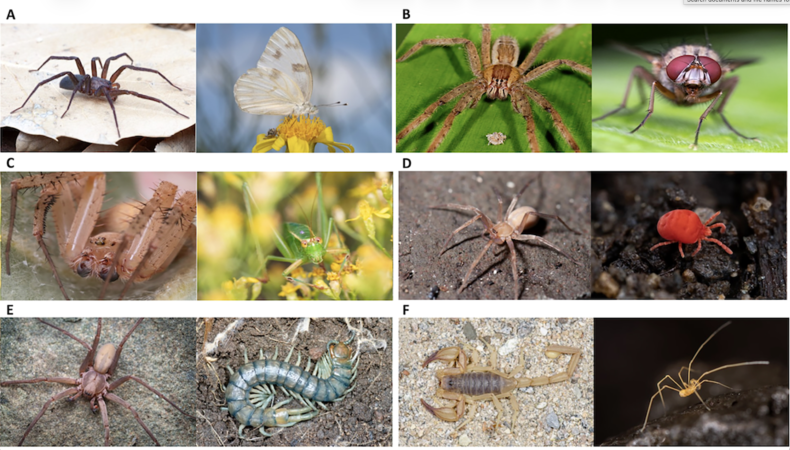
Participants in the study, published in January in Frontiers in Arachnid Science, were shown a series of pairs of photos with a spider in one and an insect or non-spider arachnid in the other. Unsurprisingly, they found that people preferred to look at anything other than a spider, even other arachnids or spider-y looking bugs. This contradicts the idea of a spider-like cognitive category. However, when they paired photos of scorpions with other non-spider arachnids, people showed a clear aversion to scorpions, which fits with the “reasonable fear” hypothesis. (For some reason the study did not include a direct spider versus scorpion pairing).
The more interesting results came when they paired photos of different kinds of spiders to try to tease out which spider traits were creepiest. They specifically chose images where different features — such as fangs, webs, eggs, eating, and hair — were present in one of the images and not the other. As the researchers wrote, “If these additional characteristics might also be considered fearful or disgusting, it might logically follow that when images of spiders are paired together, individuals should be more likely to avoid images of spiders with these additional characteristics.” But that is not what they found. Instead, people’s attention was drawn to those features. The only exception was hairy spiders, which participants preferred not to look at relative to their sleeker counterparts.
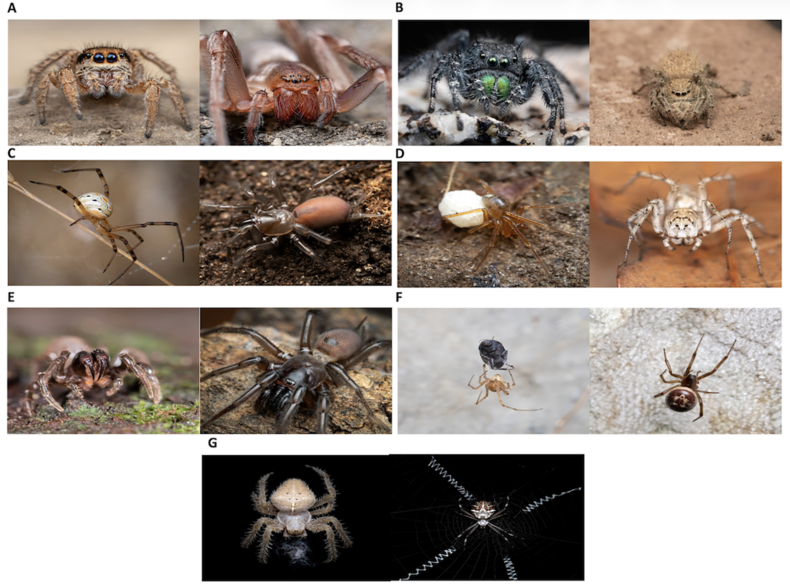
One explanation the scientists offered for this counterintuitive result was that some of the features, such as webs, eggs, and prey items, might make those spiders seem less likely to move than a spider on the ground or without a meal. If jerky, unpredictable movements are part of what people dislike about spiders, these photos might feel less threatening. Or perhaps those characteristics were simply unusual and interesting.
Another feature the scientists explored was eyes. People spent more time looking at insects with two visible eyes than any of the other bugs that were paired with spiders. This could be because people perceive these insects to have faces, making them more relatable and more easily anthropomorphized than eight-eyed spiders.
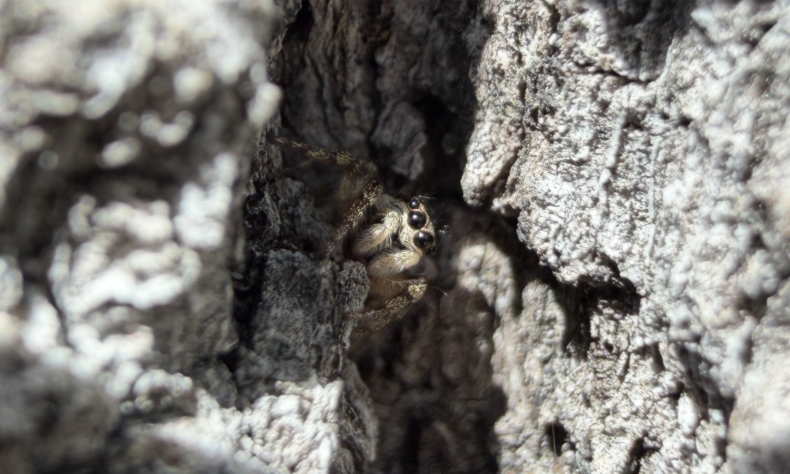
Similarly, people preferred to look at jumping spiders — which have two large, forward-facing eyes — over spiders with small, less-prominent eyes. This, the authors suggest, is simply because jumping spiders are cute. They tap into our attraction to neoteny, essentially babyfaced-ness characterized by big eyes, round faces, small noses and other juvenile traits. The evolutionary explanation for this preference is that neoteny is a cue for caregiving and empathy, ensuring that babies get the attention they need to survive. Animals with these characteristics benefit too. As the authors put it:
The “neoteny barrier” is an evolutionary human preference for and positive emotional response toward physical traits that are associated with infants, such as being young, and having cute faces, chubby bodies, and large innocent looking eyes. This extends to animals with those same characteristics; however, this is not relevant to most arthropods as they do not possess those likeable traits. One exception to this is the jumping spider, which is perceived as less frightening than other spiders and possesses neotenic traits such as two larger eyes and very short legs.
While the study is just a first step toward figuring out what it is about spiders that repulses people, the authors results point to a potential avenue for countering the aversion: “Identifying the spider traits that elicit engagement rather than avoidance … offers a promising avenue for improving science communication, conservation messaging, and potentially exposure-based interventions by leveraging features that naturally capture attention and foster curiosity rather than fear.”
It also points to a strategy that I have advocated: jumping spiders as gateway spiders.

Arachnids take the name from Arachne, mythical Greek weaver. I honor spiders in that tradition of making art and useful objects from thread, taking a skein of yarn and working it into a tapestry, knitting it into a hat or sweater.