Dear readers: Everything is (once again?) terrible. At least in this country. It feels like a roller coaster descent into the worst parts of history. My brain spends its days vacillating between wild panic and stubborn denial. I guess what I’m saying is this: I’ve got nothing for you unless you want a funeral wail or a lesson on using reels as an unhealthy and addictive escape. Actually, do you want some short videos to brighten your day? I got you. Here are five.
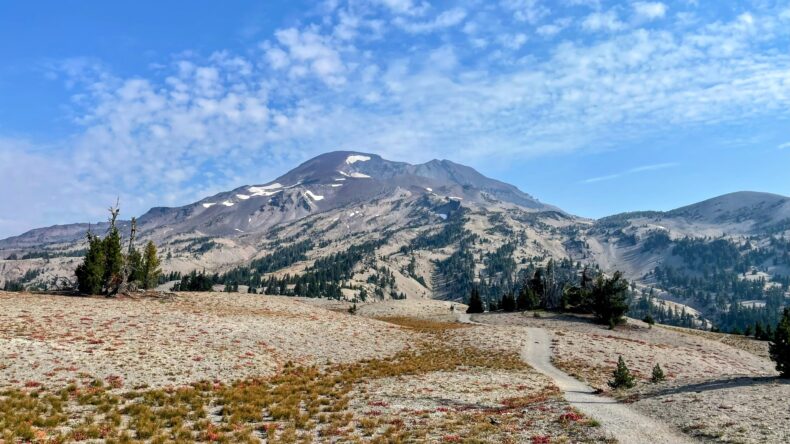
Last week my family traveled to Oregon for an end-of-summer trip. We wanted to start in Bend, in the central part of the state. There we would hike and explore a bit—somewhat to her dismay, I was especially eager to take my daughter up South Sister, one of the Three Sisters volcanoes—before driving down to Ashland to see a couple of plays at the Oregon Shakespeare Festival. After that we would head to the coast and make our way home to Seattle.
That was the plan, at any rate. Then the wildfires laughed and had their say. The day before we were to leave, one blew up a few miles north of Bend. Named the Flat Fire, it blazed over the landscape, driven by hot dry winds and abundant fuels. People who lived in its path were ordered to evacuate. Smoke poured into Bend and the surrounding communities. Air quality dots in the area went from yellow (Moderate) to red (Unhealthy), purple (Very Unhealthy), and even maroon (Hazardous).
Wildfires have been a feature of Pacific Northwest summers for a while now. Even as one whose home has never been threatened, I find the start of the burning season unsettling. The fires can have a dreadful randomness. Look at a map of the western states. Within that vast territory all it takes is a lightning strike, a branch falling on a power line, a kid throwing a fire cracker, a federal employee burning a love letter, and a tree starts to burn, and then another. Thousands of acres later, the sky looks like something out of a J.M.W. Turner painting, while the air rasps your throat on its way to your lungs.
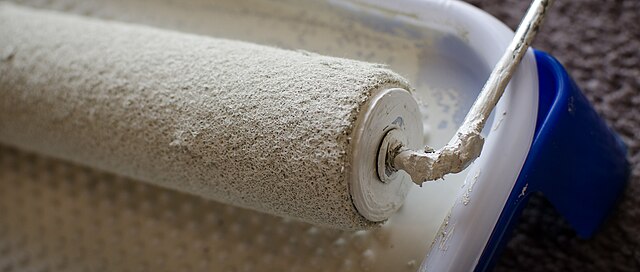
There is not a lot that keeps me online nowadays, but one thing is color. For like, walls, in a house. I am still in a grief-triggered painting phase, just like my grandmother was once in a grief-triggered drapery phase, because changing the appearance of one’s house is a thing to do that is at least somewhat productive. So I am painting.
A wall briefly became bright blue, and I hated it when I realized it matched the painter’s tape, or maybe the plasticky royal of a Lowe’s utility bucket. Then the wall became a light barely-green, almost grayish, like a snowy morning in January. Now three other walls in my house are the same Earl Grey.
My oldest child wants her room transformed to a deep teal, and has gone back and forth among several shades with names like Blue Peacock and Slate Teal. I suggest we choose lighter, softer tones like Spring Sky or Jack Frost, with maybe a Bermuda Turquoise accent wall.
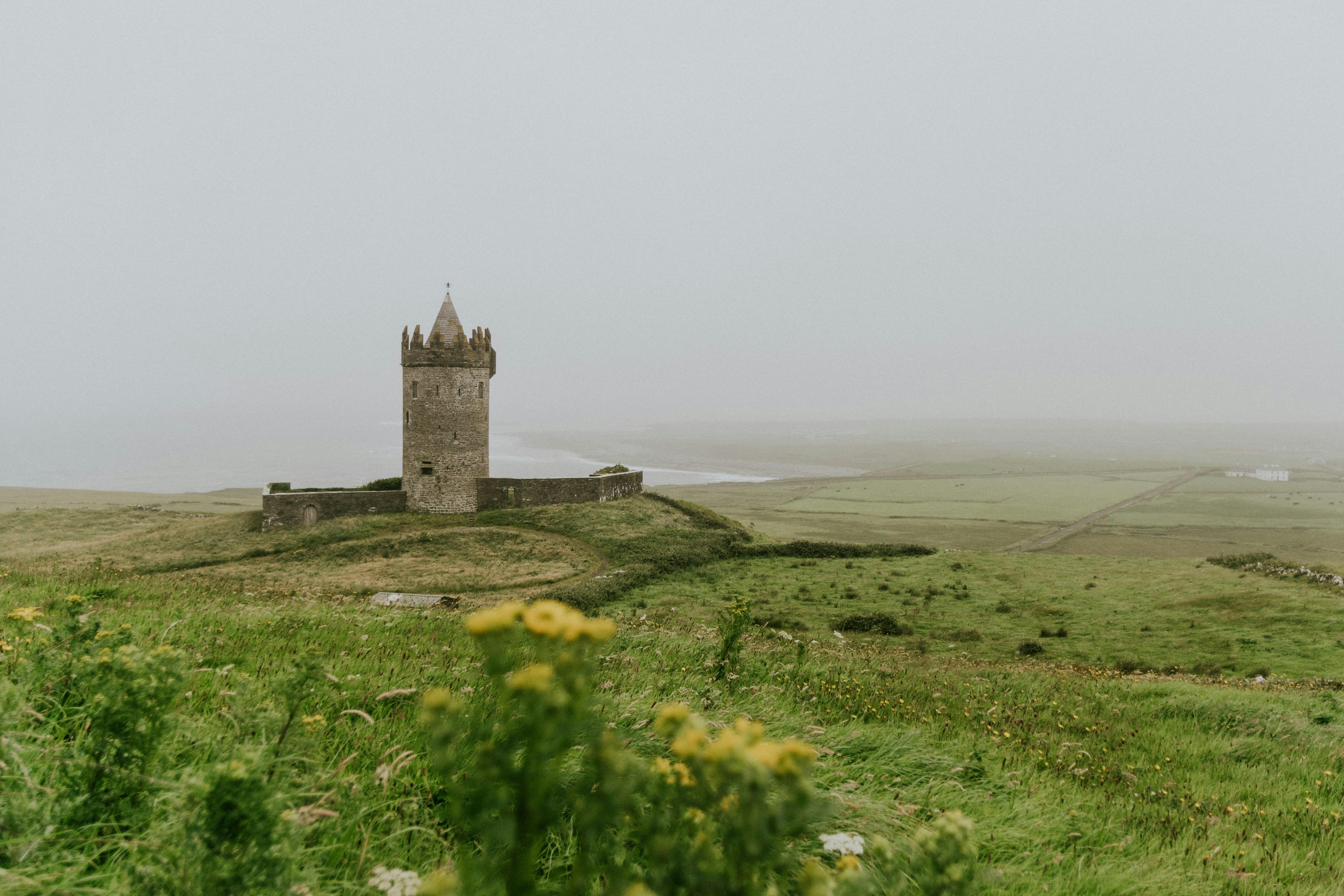
My youngest child wants green for her room, and the first one she chose was called Galway, and that is where we just were, and where my mom’s family is from, and so that is what we will be using.
The big wall in our living room was a conundrum for a while. Should it be a carefree blue, like Mediterranean Breeze? Or grayish that almost tilts toward slatey, like Aleutian? Ultimately, we decided, it needed to be a deep, azure, bold navy, but with warm undertones that will still look blue and not black once the darkness of fall evenings arrives. That huge wall is now coated in New York State of Mind, a color recommended by my best friend, who is often right about things, apparently including paint.
The big wall was finally done last week, and I am running out of other things to paint for now. I need to get back to work. Think about what else I could be creating. The wall was in transition for so long that it keeps surprising me, that deep blue that echoes the upper layers of our atmosphere. I am satisfied with how it looks, I think.
The other day I put away the tape and the canvas dropcloth. In a few weeks, when I need to mentally return to Connemara or the tropical Atlantic, the tools will come back out, and my family will look at me quietly as I start taping the baseboards.
Most of my favorite paint colors often have names of places. Maybe I should sell out and go into marketing and come up with names for paints, because Bermuda turquoise and Galway green do evoke those places, and those places are where we go to feel rested, or at home. I can think of a thousand colors to represent the feelings that come with places. There would be fanciful and thoughtful names for the in-between feelings and the in-between places. Pantone for your ecotone.
Paint is a way to escape. I suppose that is why I am painting.
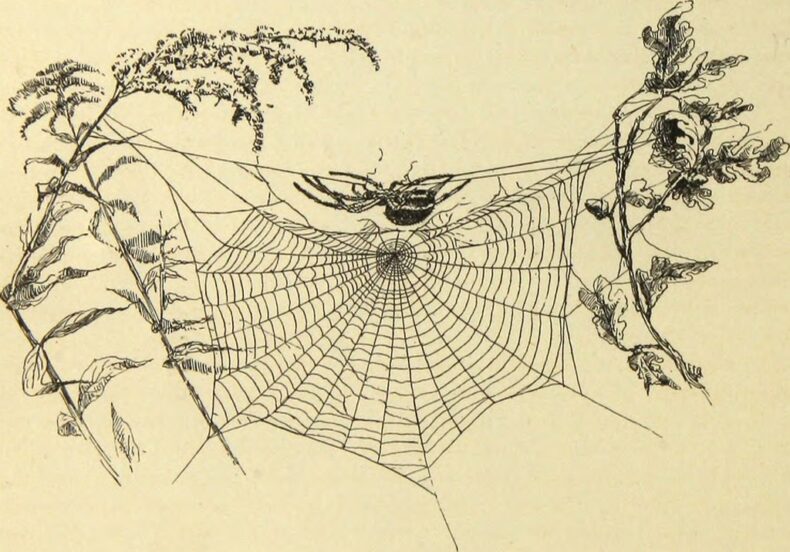
Image from “American spiders and their spinning work. A natural history of the orbweaving spiders of the United States, with special regard to their industry and habits” (1889)
Happy spider mating season! I keep finding baby spiders in my shoes, and every morning there are new cobwebs in my car’s steering wheel. Maybe you’re seeing more spiders, too? Our own LWONian Betsy Mason wrote about the noble art of counting spiders for Knowable Magazine last year. And this little post first ran in September 2023.
My garden has a guardian, an enormous black-and-yellow orb spider. I look for her every morning when I enter the enclosure we built last spring to keep the deer out and make a spot for Calliope to bask in the sun and chase lizards.
She’s mostly blind, this spider. But she can sense me coming. I used to barge into the garden without thinking, swinging open the gate before I realized she’d used it as an anchor. She never fell or swung loose. By the time I spotted her or the remnants of her web, now in tatters, she’d usually retreated to a high spot on the fence.
We know spiders are capable of learning, planning, surprise. Do they also feel resentment?
I don’t know about you, but I have been waiting all year to wrap my hands around some tasty, tender tomatoes and arrange them in colorful patterns on my kitchen counter.
That shit is going to look like the embodiment of late summer. I’m dusting off my harvesting baskets and steel bowls, jamming them with juicy, just-off-the-vine tomatoes of every color.
When my guests come over, it’s like, BLAMMO! Check out my overflowing bounty of luscious, juicy tomatoes, assholes. Guess what season it is — fucking harvest season! There’s a feeling of ripeness in the air and my house is full of tender fucking tomatoes.
And you know what I’m going to do? I’m going to throw some multi-colored tomatoes into a roasting pan, and I’m going to drizzle them with some genuine California olive oil and then I’m going to slow-roast them until their scrumptious flavors have bubbled up into a taste explosion.
And when people come over and smell the aroma of roasting tomatoes in my kitchen, they’re going to be like, “Aren’t those tomatoes smelling up your house?” And I’m going to spread another perfected roasted purple Cherokee onto a slice of homemade sourdough and quietly reply, “It’s harvest season, fuckfaces. You’re either ready to reap this tasty bounty or you’re not.”
Roasting purple, yellow, orange and red tomatoes sounds like a pretty fitting way to ring in the season. There is no more ideal food than a perfectly roasted tomato, and I am going to roast tomatoes until there are no more tomatoes to roast.
Why? Because it’s not that long stretch when the garden is growing but nothing is ripe, and it’s not spring or winter or the post-frost fall yet. Grab a calendar and pull your fucking heads out of your asses; it’s harvest season, fuckers.
For now, all I plan to do is to throw on a t-shirt, some light overalls and a floppy fucking hat and kneel down in my garden and keep picking this near-endless stream of ripe tomatoes for the next six weeks, or until the first frost. The first skunk that tries to sneak in and steal my ripe tomatoes is going to get his stinky ass bitch-slapped all the way back to the long days of early summer, when the plants are green but so are the tomatoes.
Welcome to harvest season, fuckheads!
PLEASE NOTE: Today’s parody post is based on this McSweeney’s classic by Colin Nissan.
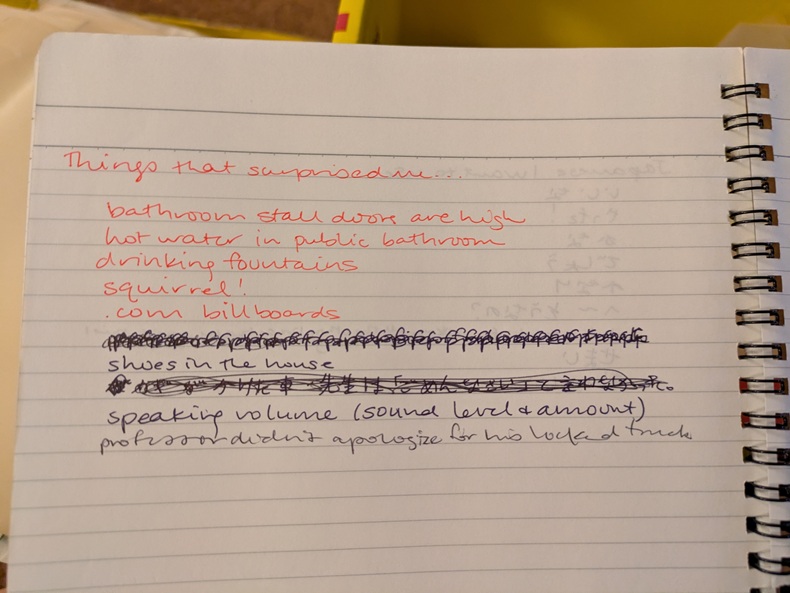
I’ve been spending a lot of time in the past lately. As I get my parents’ house ready for sale, I’ve been looking at decades of memorabilia. A dozen or so boxes of my own memories lived in the attic, and the above picture is one of them: a list of things that surprised me when I visited the U.S. from Japan.
Things that surprised me:
bathroom stall doors are high
hot water in public bathrooms
drinking fountains
squirrel!
.com billboards
shoes in the house
speaking volume (sound level + amount)
professor didn’t apologize for his locked truck
This list is a time capsule from the dot-com boom. I read it today and I remember riding into Chicago from the airport at night, seeing billboard after billboard for companies that hadn’t existed a few years before, hearing “…Baby One More Time” for the first time on my friend’s car radio, and feeling very jetlagged and confused.
And it’s a time capsule of me. My late-90s handwriting. And my late-90s ability to write in Japanese. I like how I wrote the observation about the professor’s truck in Japanese, then crossed it out and rewrote it in English. I don’t remember what happened, but I can imagine the zing of culture shock when someone caused a mild inconvenience, then failed to apologize for it profusely.
I like how much you can extrapolate about my life in Japan from this list. About apologies, and shoes, and particularly about public restrooms, which had cold water only, were mostly squat toilets (so you really needed the door to go all the way down to the floor), and were not associated with drinking fountains.
What I love the most about this is, I assume, why I wrote the list: the memory of that reverse culture shock. That feeling where you’ve been gone long enough that you come back and think, oh my goodness, I forgot we do it like that! Home is so weird!
I can’t remember when I last had that feeling. It might be time for me to get out of the country again. If you’re immersed enough and pay attention enough, you realize that people have completely different ways of doing things – the little things and the big things – that your way is not the only way, and that it’s a wonderful, weird, wild, wide world.
I love listening to people speak a language unfamiliar to me. I mean, it’s delightful to hear one of the romance languages rattled off a tongue, and it’s nice when the brain dips into the ratty old pocket labeled “high-school French” to tell you what it means. But I’m talking about not knowing a single word, where every utterance is just a sound, nothing attached. There’s something so freeing about being entirely in the dark, giving the brain a rest from thinking and trying to know.
My favorite for this exercise, I discovered years ago, is Gaelic, or I should say Gaeilge (one of the two official languages of Ireland, what we Americans call Irish). I first listened to conversational Gaeilge while on assignment reporting a story about the undersea creatures that thrive in the cold dark waters of the Celtic Sea. (Aside: There are surprisingly colorful communities down there, I was happy to discover, but you have to wear a dry suit to stay warm enough to hang out with them and that’s a whole other kind of SCUBA, a kind where, if you miscalculate your buoyancy, you can find yourself suddenly rising to the surface feet first, a disconcerting experience to say the least).
Back to Gaelige. I had rented a car so I could drive the southern coast after my reporting was done, and puttering along in County Cork I flipped the radio to a news channel that was all talk all the time. In Irish, of course. To me, a music channel. I couldn’t get enough of it. Other than the names of two political parties that came up a lot (Sinn Féin and Fine Gael), it was all Greek to me. (Apologies.)
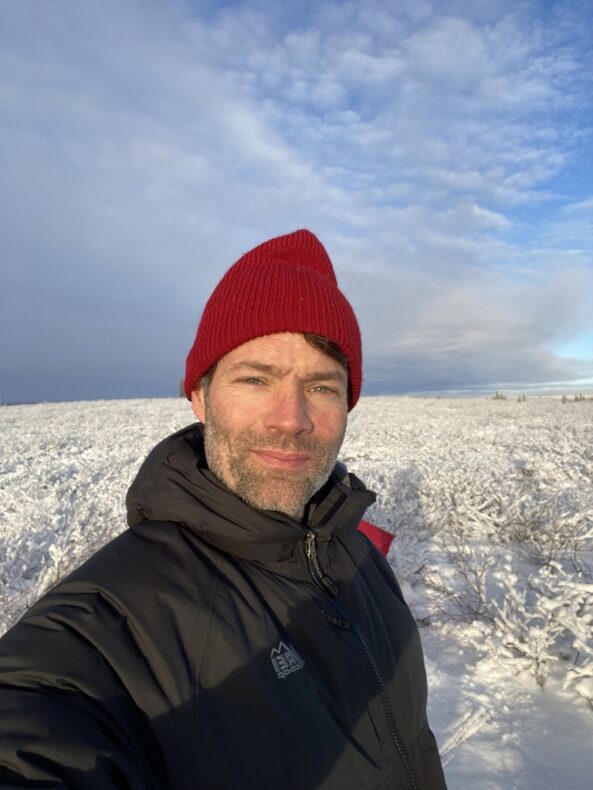
We’re sorry, we should have introduced you to this sterling new Person of LWON before he posted his first post but to our dismay, we’re now doing it late and to our pleasure we’re doing it now. So please, meet (have met) Neil Shea.
He started out as a photographer and when all that equipment got too heavy — he says — he naturally turned to writing. And he’s done it well and thoroughly: he’s been a contributing writer at National Geographic, the Virginia Quarterly Review, and the American Scholar, not to mention film and TV scripts, AND a podcast called Unfinished: Deep South. And since that’s not enough, he’s got a book coming out in December 2025 called Frostlines: A journey through entangled lives and landscapes in a warming Arctic.
We’re pleased and proud he agreed to join LWON; we’re also obviously impressed.