In this month’s issue of National Geographic, I lay out a simple question. How many great white sharks are there on Earth?
It seems simple enough – we’ve found some 3,500 planets outside our solar system and 400,000 species of beetles on Earth. This is the modern world of crowdsourcing and big data. We can go online and learn that the black-rumped agouti has 857,000,000 neurons in its brain. How hard is it to count 18-foot fish eating giant animals that lay out on rocks all day? When I started this project I figured we had not only counted them all but named them as well.
Boy, was I in for a surprise. It turns out that we have almost no idea how many great white sharks there are on Earth. These are not agoutis – which, chances are, you had to google just now – this is the world’s most iconic sea creature. Not only is this surprising but it’s a big problem since you can’t protect a population if you don’t know how big it is. How can we tell if great whites are in trouble if we don’t know how many there are? And how can we tell if their populations are improving? From a policy perspective, no other question really matters.
That’s not to say people haven’t taken stabs at it. An alarming 2011 paper estimated the population in the notoriously sharky waters of Central California at 219. Which was shockingly low until another came out using the same data that put it north of 2,000. So I guess it depends on how you count. Which raises a really interesting question: How do you count sharks?
The answer, as you might expect, comes down to Scottish taxicabs. That’s not a joke, I’m dead serious. If you want to understand the future of great white sharks on Earth, you must first understand the only taxi drivers on Earth who (I can only assume) all wear kilts. Continue reading →
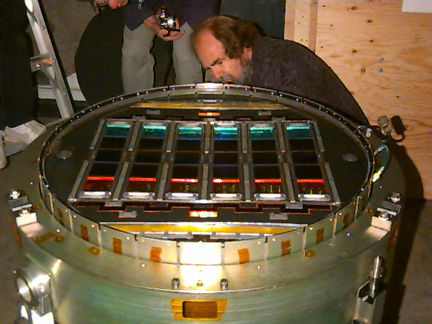
 That’s Jim Gunn up there, concentrating on his camera. Jim’s camera shouldn’t really qualify for a week of posts celebrating uncelebrated technology because it was famous for quite a while. It was inventive and perfectly made and did something no camera had ever done: it digitized the sky. But like most new and wonderful technologies, the camera became just the first in a series of newer and more wonderful technologies. Now, 30 years later, it’s been warehoused; and it might as well be a tea towel, a paperclip, a pocket calculator, or any other old crap technology. Sigh. Click.


 If you read my post earlier this week, you’ll know that I did this fantastic science fair project back in the 7th grade. In fact, when it comes to science, I might have peaked in middle school—which is pretty sad. But I peaked in a big way with that bone-growing experiment.