Years ago, when I was in science writing grad school, we had an assignment to write a profile. I’d only written one before, in an intro journalism class, and it was pretty bad. My roommate played beach volleyball with a scientist who did her field work under the ice in Antarctica. She introduced us and I learned how to write a profile.
I have forgotten the name of the lecturer who taught our profile class. I do remember that on the day she gave back our profiles, she was very negative about them, and her comment on mine was, something like “I wouldn’t have started it with the stream of shit.”
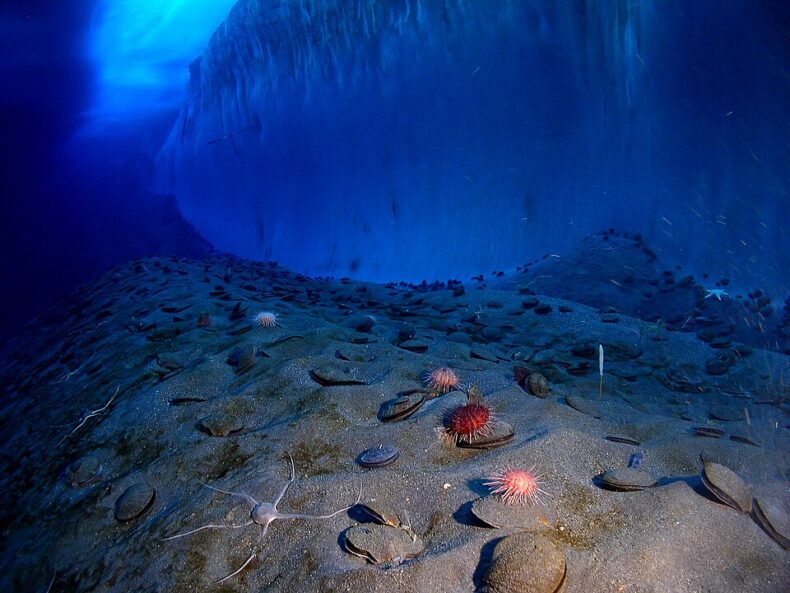
Read more: Scuba diving on a stream of human wasteThe scientist told me about a lot of amazing things she’d seen underwater, but one of the most memorable was describing the area around the sewage outflow from McMurdo Station. There she was, scuba diving into one of the most special environments on earth, seeing incredible, exotic animals in the blue water beneath the sea ice, and also there was a stream of human waste. That’s the kind of striking image you’re looking for in a lede, to draw a reader in.
But I know how to make a teacher happy, so I revised the story with something else as the lede. And then, when I submitted the story to the local paper (where I was interning), obviously I put the sewage outflow back at the top, and obviously my editor loved it, and that’s how it ran.
My favorite story about this scientist, whose name I can’t even remember, was not about the waste outflow, but about what an utter bad-ass she was. To dive under the ice, you have to cut a hole through the ice, just big enough for a person, and then descend through it. One time she had just gotten into the hole in all her gear when she screeched and popped back out. It turned out the zipper on her dry suit was open, and extremely cold Antarctic water had flooded into her dry suit. And what did she do? She zipped it up and got back in. Bad-ass.
I thought of this story recently because I was listening to a radio story about another absolute bad-ass, a woman who had run an ultramarathon in Antarctica. She said one of the worst things was the bathroom breaks (you can’t go behind a tree in Antarctica, because there aren’t any), and there was a mention of how all the waste gets shipped out to Cape Town.
My head popped up like a prairie dog. Shipped out?? What happened to the stream of shit? The mention of Cape Town meant this ultramarathon must have happened around some other country’s outpost in Antarctica. I immediately started googling. (I wasn’t the driver. The googling was safe.) I wanted to know: Is McMurdo treating its sewage now?
And I found out: it is! The station got a sewage treatment plant in 2015, more than a decade after my story came out. If this 2015 story I found is still accurate, the waste gets mushed up, dehydrated, and UV-disinfected. Leftover solids are dried and shipped out.
I can’t check any of my memories right now; any notes or copies of that story are in a box somewhere in my storage unit. I could probably come up with the name of the researcher if I thought harder or let AI help me, but I’m choosing to leave it vague.
What stands out about this is that, for me, knowledge of McMurdo’s sewage treatment was frozen in time about 23 years ago, when my story came out and they just mushed up the waste and sent it out to sea. But it turns out that the world kept changing. While I was off growing up and having a journalism career and writing more profiles, teams of experts were figuring out how to handle a bunch of researchers’ waste. And something, one thing, in this world got better.
Photo: NSF/USAP photo by Steve Clabuesch; uploaded by en:User:Fishdecoy, Public domain, via Wikimedia Commons

