The best acronym, in this our golden age of acronyms, is TIL, for Today I Learned. I love it. People use #TIL as a hashtag on social media, but not to show off. It doesn’t mean “I know something you don’t know, nyah-nyah-nyah-nyah-nyah.” It means here’s something I just learned, and it’s delightful, and I’d like to share it with you. It’s humble. It’s generous. TIL is the opposite of smug.
TIL names that distinct burst of joy you get when you learn something you’re happy to know. It’s a way to mark that moment, to recognize that life is enriched by this new word or stray fact. It’s why trivia night at a brewpub is so much fun. It’s great when you know the answer to a trivia question, especially when it’s something you didn’t know you knew. (In what fictional county was the TV show “Hee Haw” set? Cornfield County (although they spell it with Ks, which is unfortunate).) The irritation of missing a question is balanced by the opportunity to learn from it. Did you know baseball players use a modified bat to pop up fly balls so their teammates can practice fielding? And it has a name? It’s called a “fungo.” (Thanks, Pourhouse Trivia.)
There’s an XKCD comic about TIL (because there is always an XKCD comic). If “everyone knows” something, Randall Munroe calculates, at least 10,000 people are learning it new every day. You can learn a lot from comics! This week I learned from Rosemary Mosco’s Bird and Moon that most rabbits nest under leaves, not in a burrow.
I’m using the T in TIL loosely in this post, to cover things I’ve learned in the past weeks or months, but today (literally today) I learned that TIL is more precisely an an initialism, and not a classic acronym, which is a spoken word formed from initials, like NASA or FUBAR. I bet a lot of you knew that already. That’s one reason TIL contains multitudes: It reveal weakness and trusts you not to gloat.
Those of us who work in or enjoy science journalism get to experience TIL all the time. You know how dragonflies were enormous during the Carboniferous 300 million years ago? The textbook explanation is that the atmosphere was richer in oxygen then, and lungless creatures could absorb enough oxygen to support a large body. It turns out oxygen might not be the limiting factor for their size; they might have gotten big because, well, why not? There were no predators to eat them and exert evolutionary pressure to be small and speedy. The other writers here at Last Word on Nothing have given me TIL moments lately about forlorn chairs, the relationship between “story” and “history,” and a scientist who grew up in a megacity so bright that she didn’t know stars were real.
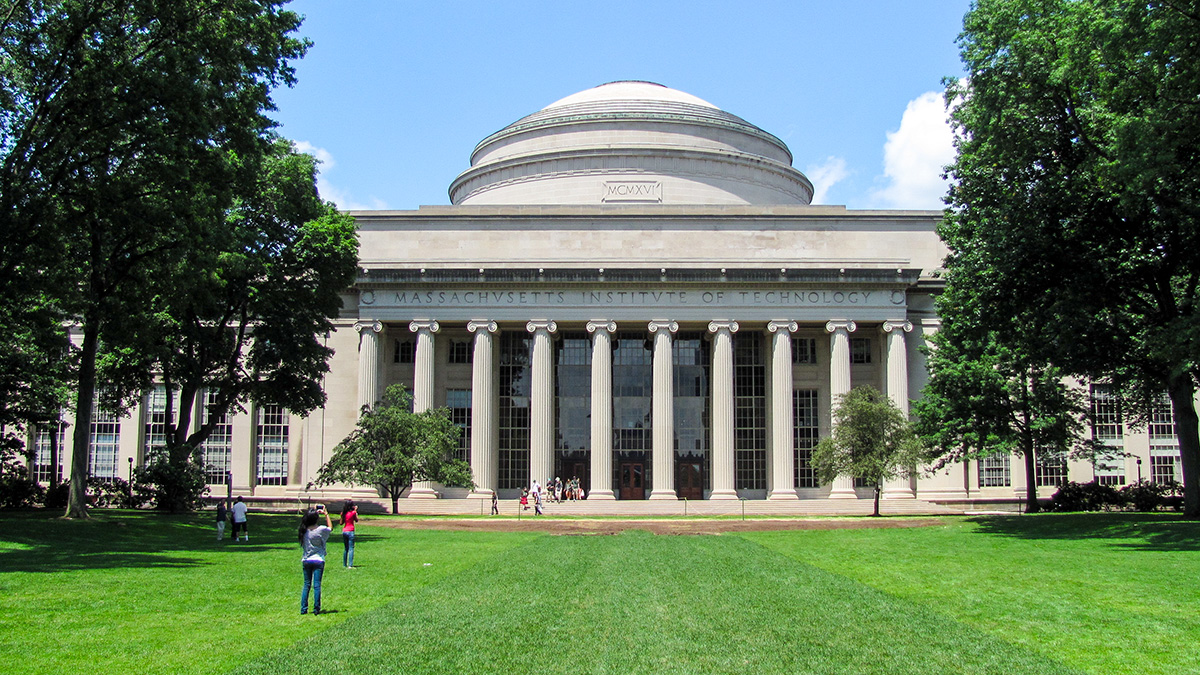
I read a great book recently called “Why Q Needs U” by Danny Bate. It’s a history of the English alphabet, one chapter for each letter. Some fun items: U and V used to be the same letter. That’s why old (or pretend-old) signs use Vs where Us should go. (Lookin’ at you MASSACHVSETTS INSTITVTE OF TECHNOLOGY.) You know what else? The letter Q evolved from a hieroglyph that depicted a monkey. The Q’s tail is a monkey’s tail!
At a nibling’s graduation, I learned that the movie Animal House was filmed at the University of Oregon, which inspired a tradition of playing the song “Shout” for every possible occasion, including graduation ceremonies. (“Nibling,” by the way, is a gender-inclusive term for nieces and nephews, like “sibling” means brothers and sisters.) The graduating class and all the faculty sang along, throwing their hands in the air, crouching and swiveling for the “a little bit softer now” and jumping up at the end of the “a little bit louder now” bits. “Shout” originated as a call-and-response finale to another Isley Brothers song, “Lonely Teardrops.” Really! Isn’t that great? (I learned that, and a million other fascinating things, from Andrew Hickey’s podcast A History of Rock Music in 500 Songs.)
The best podcasts, like Andrew’s, are brimming with TIL. If you’re not listening to it already, please do check out Gastropod, about the science and history of food, by my friends Cynthia Graber and Nicola Twilley. Frosted Flakes were invented to prolong the shelf-stability of corn flakes. The material your utensils are made of can change the flavor of food. If you’re buying canned tomatoes, go for the whole ones and cut them up yourself rather than just buying diced. That’s because the tomatoes that get canned whole are of better quality and don’t need calcium chloride, a firming-up preservative that some people can taste.
The English language is an endless source of TIL. Sign up for Anu Garg’s “A Word A Day” newsletter for great words and smart commentary. I recently learned from it that there’s a word for the deliberate production of ignorance or doubt: “agnotology.” “Billingsgate” means “foul language,” from a fishmonger market in London that was famous for its swearing (thanks, Ray Hamel and your Slate quiz). “Peelers” is slang for cops (thanks, Adrian McKinty, author of the excellent Sean Duffy books with Tom Waits titles set in Northern Ireland in the 1980s). A baby falcon is called an eyas. At the Tillamook cheese factory, I learned that “cheddaring” is a verb that describes the process of stacking curds to press out whey.
Speaking of Tillamook, the mascot of the Tillamook, Oregon, high school is the “Cheesemakers.” Most teams named after types of people are problematic and should be changed, but I think this is one is a reasonable exception, along with the Purdue Boilermakers. This week I learned that Notre Dame’s “Fighting Irish” refers to Catholics fighting the Ku Klux Klan, so that one’s legit as well (thanks, Kendra Pierre-Louis).
Vacations, especially science vacations, are a great source of TIL. On a recent visit to Vancouver city and Vancouver Island, I learned that George Vancouver sailed right by the Columbia River on his Vancouver Expedition, possibly because it was foggy. Whalers extirpated humpback whales from the Salish Sea; now more than 1,000 have been identified there and you have a good chance of seeing them on a whale watching trip.
There ought to be a name for the type of TIL where you learn something that makes sense of something you never thought to wonder about. I was in Switzerland a few years ago for a conference and saw a bunch of gardens growing … Swiss chard. I’ve been eating and growing Swiss chard for years but never thought, huh, I guess it’s a Swiss thing? If there is a name or an acronym for this experience, I would love to learn it!
TIL is an antidote to the “curse of knowledge,” the assumption that other people know the same things you do. This curse can be a problem for science journalists, because we sometimes assume everybody already knows about gecko feet, the success of the HPV vaccine, Saturn’s moons, glacial rebounding, Vantablack (also an acronym), or what have you, so why is it interesting? But for most people, it is new, at least to them, and interesting.
We all have the weirdest collections of knowledge in our heads, and everybody’s is different. And I’d love to know: What are some of the things that have given you a TIL moment recently?

I was thrilled to learn recently that wet dragonflies dry off by spinning around and around in the air. I mean, how fun is that! Then again, the scientists didn’t really know that until recently either, so that might not count here. Still, I’m very happy to know it now. More in keeping with TIL, I learned that those cosmic particles called neutrinos are at this moment zooming straight through our bodies by the trillions. Thank goodness they don’t tickle. Meanwhile, thanks for the heads-up on canned tomatoes.
Ha! Delightful, thank you!
Delightful essay. So nice to read something uplifting that isn’t the slightest bit sappy.