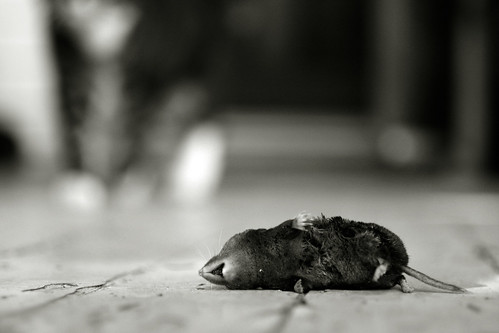
 A container full of sterile goods left Eastern China one day and ended up, four months later, in the Netherlands. As unpackers were rummaging through packing material, they turned up a tiny mummified mouse. The goods, evidently, were not sterile.
They were insured, though, and the insurance company needed to figure out who was to blame. Did the vermin board in China, or the Netherlands?
The corpse went to the Netherlands Centre for Biodiversity Naturalis for a taxonomical work-up. The company hoped that by identifying the type of mouse, scientists could pinpoint where it came from.
Researchers determined, based on anatomy, that the critter was an adolescent wood or field mouse from the Apodemus genus. But that didn’t really help: two species of Apodemus scurry through the Netherlands, and two other Apodemus species are native to Eastern China.
Luckily, the geographical boundaries of the Chinese species and the Dutch species do not overlap. So, the team reasoned, if they could identify this specimen’s species, they could solve the mystery.
This required a genetic screening. From browsing online gene databases, D.S.J. Groenenberg and R.W.R.J. Dekker discovered that analyzing the DNA-letter sequence of just one gene—Cytochrome B—would allow them to distinguish between these four species of Apodemus. So the researchers pulled the mouse out of the freezer and snipped off a 4-millimeter bit of its tail.
The extracted DNA betrayed the creature’s identity: it was Apodemus sylvaticus, a long-tailed wood mouse. This species spans a huge geographic range—as far east as Nepal, as far south as North Africa, as far west as Ireland and as far north as Sweden. But A. sylvaticus has never roamed Eastern China. The Dutch were to blame.
**
This work (cutely named “A mouse’s tail: How to settle an insurance dispute“) was published online 17 December in Forensic Science International.
Photo by jkonig, via Flickr
 We’re sorry, but Thomas Hayden, the New Person of LWON, will be unable to post today as promised. Instead we present for your delight and edification, Heather. Tom will be back as soon as possible and in the meantime, we send him our best wishes for recovery.

 May 20: Craig Venter’s team synthesizes a bacterial genome in the lab, sticks it into an empty bacterial cell, and watches it replicate. Venter calls it the “
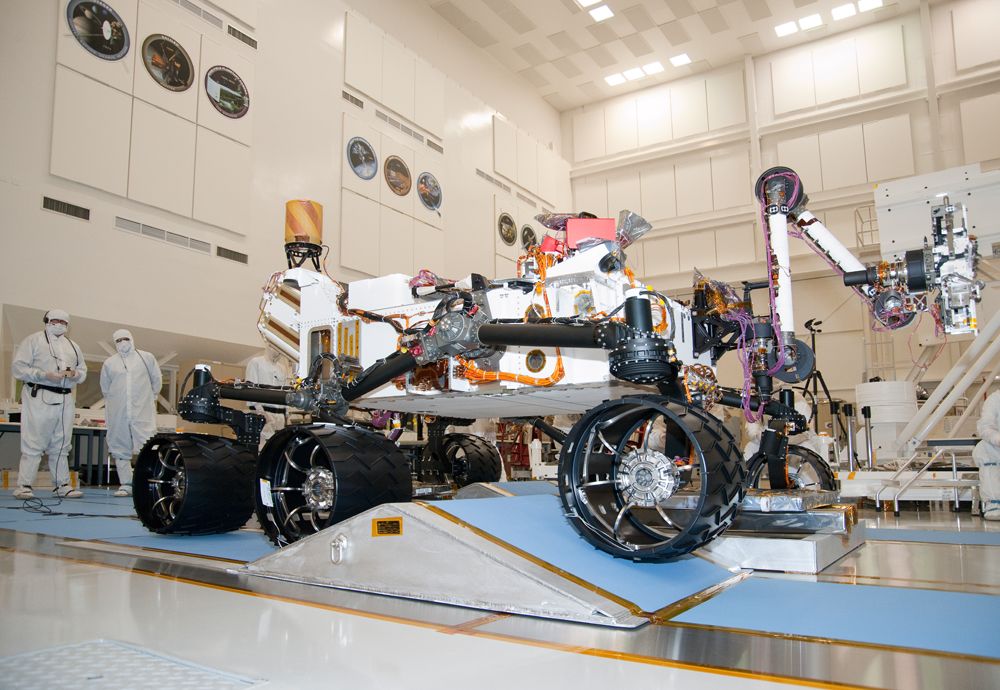 July 23: NASA scientists take the new Mars rover, Curiosity, for a test drive. When it heads to the Red Planet, in late 2011, Curiosity will hold several instruments equipped to


