 Erika wants to know about the state of autism research. “How is the field doing in terms of rigorous science?” she asks. “What is the most promising theory about how autism develops?”
The first question’s easy to answer: pretty damn well. In 2008 (the last time a good survey was done), autism research reaped $144 million in tax dollars and $78 million from private funds. That’s a helluva lot of interest in a disorder that is diagnosed in 1 percent of the population. In no small part because of this investment, autism science is constantly making headlines. In just the past month, seven gangbuster autism papers have come out in the likes of Nature, Nature Genetics, Science Translational Medicine and Neuron.
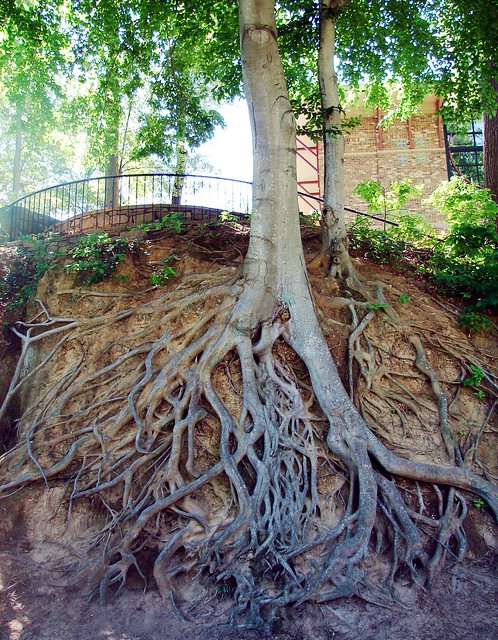
The other question, about smart theories of autism, is one I’ve been trying to sort out for awhile.* No answer is wholly satisfying, but I’ll tell you a bit about recent findings and how I see them fitting into a bigger picture. The short version: autism can begin with one of hundreds, if not thousands, of different glitches during fetal development, all of which eventually result in a similar kind of abnormal wiring in the brain. It’s like roots, separate yet impossibly tangled, which, with water, sun, and time, give way to an awesome, immutable tree.
Continue reading


