 In 2000, the last Pyrenean ibex died. These were mountain goat-like mammals with fierce black horns that scampered around the Pyrenees Mountains between France and Spain. Some cells had been taken from that last animal, and in 2009 the world learned that scientists had been able to clone the creature: a Pyrenean ibex kid was born to a surrogate mother, a hybrid between Spanish ibex and a domestic goat. (see the paper here.) The kid was delivered by cesarean section. It opened its eyes, stuck out its tongue, moved its legs about, and promptly died of lung abnormalities. Continue reading
 When William Gibson coined the term cyberspace in 1984 in the book Neuromancer, he described it as “a consensual hallucination experienced daily by billions of legitimate operators in every nation.”
Decades later, Gibson declared that cyberspace was everting. Which is to say, entering the next phase of its evolution by creeping out of the virtual boundaries that once defined it and into what we consider “real life.” Sure enough, about 5 minutes later, the world proved him right, again, and the Internet of Things began to erode the distinction between the virtual and the real.
Most descriptions of the possibilities of the Internet of Things have centered on things like RFID-tagged Starbucks cups that let the company trace your steps through its corporate universe, both real and virtual. Usually the first groups of people to find anything useful to do with new technology are marketers and the military.
But earlier this week, a study out of Nottingham Trent University and Stockholm University hinted at what I think is the real potential of the internet of things: imbuing plain vanilla reality with an extra, shared dimension. Moving our consensual hallucination into reality. Continue reading
 I don’t like guns. I’m almost universally opposed to killing things. So why then, did I spend a recent weekend learning how to handle a shotgun and rifle? What possessed me to take the hunter safety exam necessary for obtaining a hunting license? Continue reading
 As journalists, we are trained to be neutral, to never betray any hint of bias or emotion. There are exceptions, of course — the 9/11 tragedy was so universally devastating, and so deeply unfathomable, that journalists were permitted to show a sense of loss — in fact, it would have been unthinkable not to.
But for most of the events and issues we write about, we typically take a one-night-stand approach to our stories: Research the topic, talk to as many knowledgeable people as possible, maybe visit the epicenter of the debate/discovery/crisis, write the story, and then move on to the next one.
But this past summer, after the massive Las Conchas fire swept through my beloved Jemez Mountains, about an hour-and-a-half north of Santa Fe — and visible from some parts of town — something changed. Continue reading
 The box office smash hit “Contagion” features heroic (women!) scientists battling a deadly threat. Its advisers included esteemed researchers who helped keep the film true to science. And public health agencies, such as the US Centers for Disease Control and Prevention, are using the film to help build public awareness about the real threat posed by real-life pathogens.
In short, this movie should be catnip for a science junkie like me.
But instead, I’m avoiding “Contagion” like the plague. It’s not that I’m squeamish, that I think the movie is going to cause needless panic, or even that I prefer “The Lion King in 3D.” It’s just that I know too much about how vulnerable we really are to a severe outbreak of infectious disease to enjoy a Hollywood version of this scenario – even one with a happy(-ish) ending.

 Bear with me, I want to talk about my grandparents.
Hilda was my mother’s mother. Thomas was my father’s father. The difference between my mother’s and my father’s families was enormous.
My mother’s family was large and blue-collar — farmers, mechanics, truckers – and not much money or education; not much use for the fine arts; they all had a lot of kids.
My father’s family was small and white-collar; more money than my mother’s family; and everywhere were pictures I still think are beautiful and books about music, literature, religion, and philosophy.
Thomas’s house was full of culture. Hilda didn’t even have a house. I liked them both and felt the difference but never thought about why.
 The late 1990s spawned a particular kind of candy-coated teen movie–for example, Can’t Hardly Wait and 10 Things I Hate About You–in which every character is so obliviously affluent it feels almost a little bit embarrassing to watch it now. Children driving Range Rovers, high schools that look like castles, and no one ever feels the need to talk about money.
The rental car company guy who drove me to the airport told me that he’s just waiting for the economy to get better. He used to make $23 an hour driving big rigs, now he has to wear a yellow shirt and smile a lot. He says he’s going to get back to driving trucks as soon as the economy clears up. Continue reading
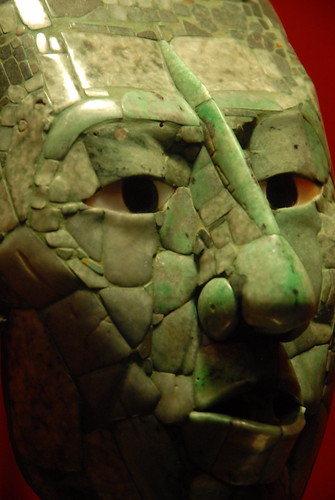
My mother is spunky and smart and I love her very much. But she’s got this one trait that drives me crazy: she believes everything she sees on The History Channel.
I visited her in Michigan a few weeks ago. One night at a local brewery, with my sister, Charlotte, and her boyfriend, Greg, in tow, Mom began telling us about why she believes humans came to earth from another planet. “Your evolution theories can’t explain the pyramids,” she said triumphantly.
“How does that have anything to do with aliens?” I asked triumphantly.
Charlotte, who goes out to eat with Mom much more often than I do, looked at Greg and smirked.
“How else would the Egyptians have known how to build them?” Mom said.
“And what evidence, exactly, do you have to support our alien origins?” I said.
“Geometry!” she said.
She then went on and on about latitudes and longitudes and the Maya and alien images in cave paintings. I understood little of what she said, but knew enough to proclaim, too loudly, “That’s such bullshit, Mom!”
For the sake of continuing an otherwise pleasant meal, we dropped it. But I resolved to find out what nonsense she was talking about and eventually set her straight.
So I found out. And it’s as crazy as I thought.
Continue reading
