 There’s a particular shade of blue that I’ve tried to replicate with pigment for much of my life. I think it’s blue, anyway. There’s gray in there, too. Indigo. Violet. Black. Flickers of gold. This blue is luminous, despite its darkness. This blue is heavy and satisfying as a thirst, slaked.
I can’t point to any objects that are this color. It belongs to something more ephemeral: The bruised underside of a storm when the sun is at a 4-o’clock slant on the opposite horizon, burning the prairie grass white in the space between. It’s a waiting color, one that heralds a sky shattered with lightning, boom-cracking thunder that ricochets inside your ribcage, and the transformation of hardpan to ankle-grabbing mud. The things that come when the spreading anvil cloud drags the hard shield of its belly over your head—tightening the blue now to opaque gray, then obliterating it in sheets of rain.
On roadtrips with my family to the High Plains when I was a teenager, I’d turn in a circle to click photos of that storm-and-sun dance with a little 35-millimeter film camera. Later, copying the artist David Hockney, I’d tape the images together into panoramic composites, and sit down in high school art class with an oblong sheet of thick paper to try to paint that sky, that blue, with my watercolors. The results were forever disappointing. Continue reading

 In my family, we talk an awful lot about bowel movements. If. When. Consistency. Pain level.
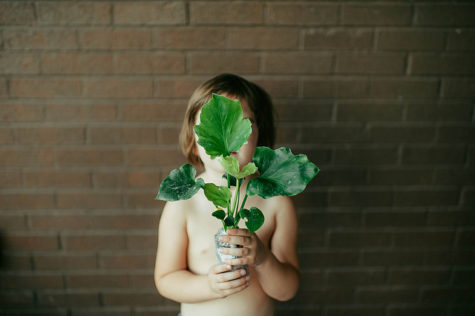 I’m in love with a houseplant. It’s a maidenhair fern, its frilly little leaves dangling from willowy stems. There’s something about it that just makes me incredibly happy. It’s true, my heart even flutters a bit when I see it.
 If it is still freezing hard during the night where you live, you can try this easy and fun art project. Find some paper plates, cups, tupperware containers, anything with an interesting shape that you can get ice out of in one piece pretty easily. I like the paper plates because you can kind of peel them off. Fill your containers with water. Now add pretty things from the yard or neighborhood. Berries, ferns, petals, rose hips, bits of evergreen foliage, anything you like. Finally, cut a length of twine and make sure the two ends are completely submerged. This will be your hanger. Leave them outside. In the morning the decoration will be ready to hang on a tree, a fence, or your front door.

