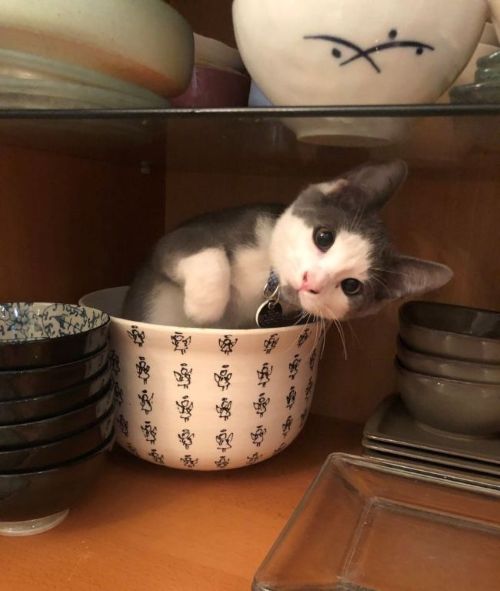
I had an ephiphany about why cats are the way they are. But before I can explain the epiphany, I should explain the way that cats are. Granted, I don’t have a cat, but I was raised with them. I lived on a small farm and farms have cats to keep the mice and rats down. The cats themselves lived in a kind of roving population, the females and babies staying pretty close to the outbuildings, the males wandering around doing what they do, and in short a farm can have several litters of babies a year who you won’t know about before you fall over them in the barn. The net numbers of cats were generally controlled by the wandering males and by the likes of my mother, and I’m not going to talk about their methods.
Never mind. The point is, I have many data points about cats so I can generalize. Cats are not your friends. They not only don’t listen to you, they don’t care what you say. They love you while they’re with you and when they want something, but honest? they don’t love you at all. The relationship is not even transactional, they’re all take and no give, it is all on their terms. They go about their own lives and business without regard for you or for the social good, and that is the reason Rudyard Kipling titled his story The Cat That Walked By Himself. They are so focused on themselves as to be psychopaths. They switch easily between friendly and feral and thus survive easily without us. They’re killers, not killers-in-groups, but killers all by themselves and they don’t necessarily kill to eat.
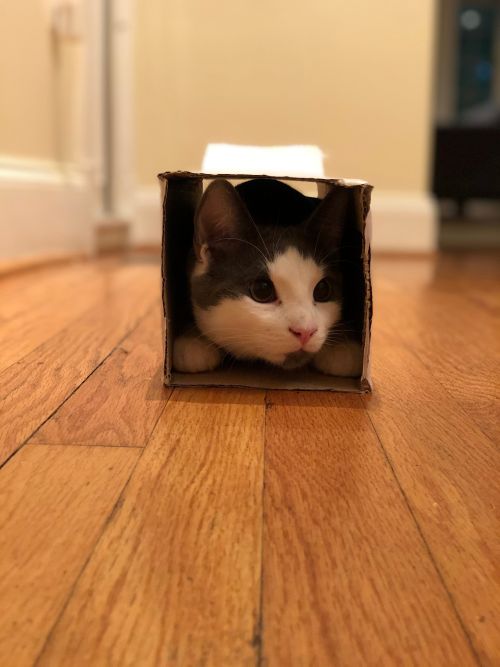
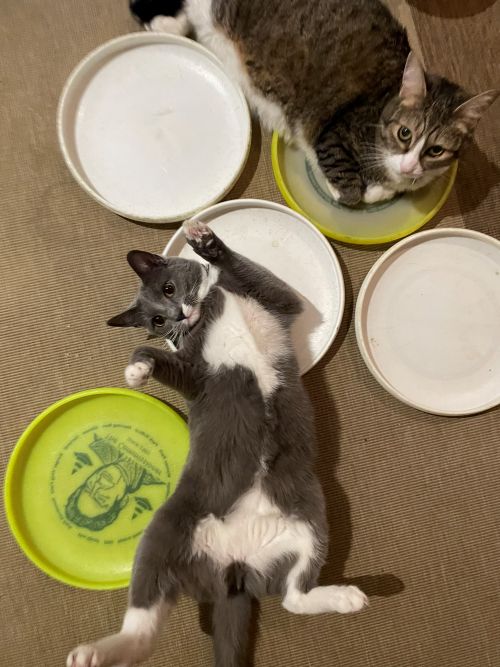
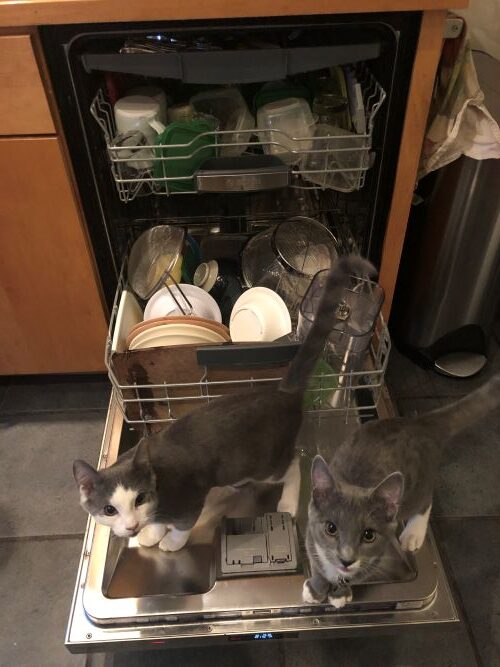
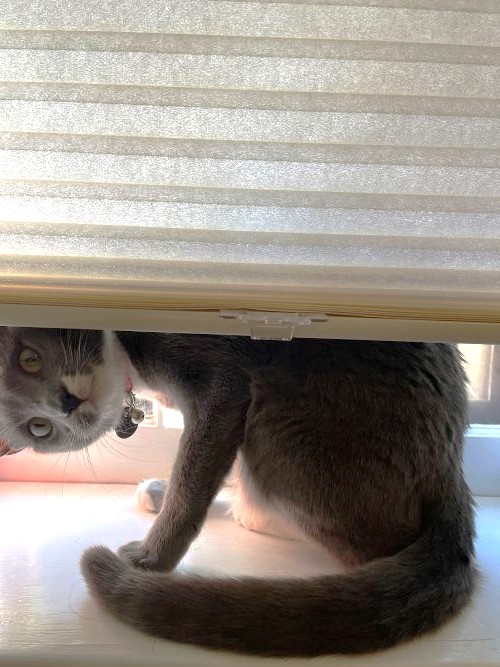
For further data, I also called upon my neighbors who have had many cats over many years. It’s true that a lot of their data points are irrelevant to my epiphany (which I haven’t yet explained). However, their data mainly suggest that cats like to sit in or on things. They offer many photos, 1700 in fact. I include some of those photos here in case they’re relevant after all. For instance, one possibility is that cats sit in or on things as practice for lurking invisibly before seizing upon their prey. Some photos back this possibility, some do not.
Anyway, my epiphany: I read an article in Science magazine about how long ago cats became domesticated. To begin with, the article couldn’t assert that cats were even domesticated; they used the word but said that sometimes “semi-domesticated” was preferable.
One line of evidence for the age of domestication was archeological — i.e., how long ago were cats found around humans in archeological digs — but it has fundamental problems. One: skeletons of both domestic and wild cats look the same. Two: wild cat kittens are easily tamed. So, in the article’s words, “an archaeological cat found in a domestic setting is not necessarily a domestic cat.” Nevertheless, archeological evidence from Greece and Italy says cats were domesticated as early as 3700 years ago.
Another line of evidence is genetic. There’s lots of back-and-forth about this one and problems with mummified DNA and small samples, but cut to the chase: domestic cats and their DNA weren’t in Europe or southwest Asia before 2000 years ago. So cats became domesticated or semi-domesticated between 2000 and 3700 years ago. Which is interesting because of the comparison with dogs.
DNA and archeological evidence have dogs being domesticated between 11,000 and 33,000 years ago. So dogs have lived around and with humans for much, much longer. Furthermore, a higher proportion of dogs’ genes are devoted to domestication than cats’. Dogs have three times more genes showing the move from wolves to dogs than cats do showing the move from wild cat to domestic cat.
At least, I’m pretty sure that’s what the article on dogs said. I take all this to mean that cats are genetically and evolutionarily much less devoted to domestication. Which explains that easy switch from being domestic to being claws-out feral, that easy ability to walk out the door and not look back. Which is what I’ve been saying all along.
In short, the epiphany: cats are the way they are because they’re behind on the path to civilization by millenia. Meanwhile, they’re perched on the sill behind the shades, waiting in case you show weakness.
______________
The photos are by Liz. The top photo is included just as click bait and is not telling the whole truth about that cat. All the cats live with Liz and her family who are good to the cats, are close observers, and are not fooled for a minute.

Umm. I’m not sure about this. I’ve had many, many more cats than Liz. And many who preferred outdoors to in, except for meals. But when the end of their life was near they always came home to die in a dark warm closet.
Axel is suddenly encouraging me to have you over for coffee. I’m not sure why.
Probably I would be a snack. Axel is the last cat I would trust.