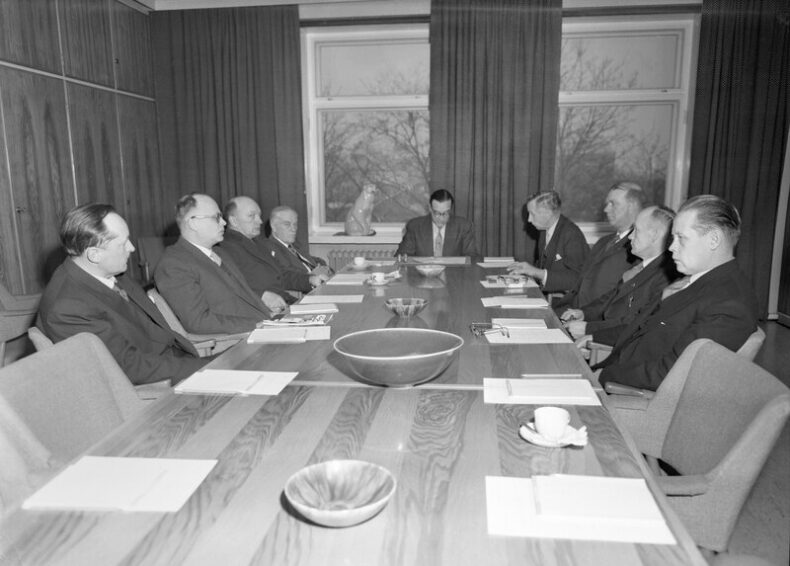
“Being a CEO is tough because you’re in a meeting from 9 to 10—internal meeting—this design is wrong. 10:00, there’s a customer. 11:00, there’s an interview. 12:00, there’s an employee quitting that you don’t want to quit that was not on your schedule, and you’re eating while you’re dealing with that, so you better not carry over, “Wow, I saw a bunch of geniuses in that last meeting” or “That was the bozo-est meeting of all time.” If you carry that over to your next meeting, it’s going to really randomize the world.”
That’s Bill Gates talking to Dax Shepard on the Armchair Expert Podcast. It’s not just CEOs that have these bananas schedules that require a lot of context switching, and often executives now go for half-hour or even 15 minute increments. It’s even worse with everything on Zoom because you don’t even get the five minute walk to a different conference room to reset. Each Zoom meeting reliably goes 4 minutes past schedule, despite the ‘hard stop’, and the executive signs off and goes directly into the next one. Coffee and lunch are delivered to their desk.
I’ve been working closely with a handful of these overschedulers in the past few years, and what I’ve noticed is that they can’t retain things properly. Like, at all. What they do retain from meetings, they can’t accurately attribute to the right speaker. This isn’t one overwhelmed person—it’s how the brain works.
We consolidate language into our memory via a phonological loop whereby we rehearse what we’ve heard in our heads until it sticks there. Most of us do this without intentional effort, our minds bringing up phrases and memories unbidden throughout the day from this morning’s meeting. But experiments reliably show that any interruption in this rehearsal results in a failure to encode the memory—it simply vanishes from working memory, the holding space for ideas that we’re actively working on at any given moment.
Even within a meeting, for most of us something will strike us as worth thinking about and our minds will work on the thought, tying it together with associated concepts and storing it away, before we mentally rejoin the conversation. But executives often can’t even take these moments of revery within their meetings—let alone after them—because they are the focus of the meeting. Everyone is watching them for reactions, they have to participate and weigh in on every point, so they have to attend and be present all the time.
This is why many mistakes are made. It leads to a style of impressionistic decision making that a CEO might call “pattern recognition” or “gut thinking” but that is really the result of not being able to sit down with a clear understanding of the facts and reach a logical conclusion, or else to notice what data is missing and ask for that information. It’s a hazard and a menace to an organization.
Sleep has lately made a comeback as a key productivity tool, and that’s largely because it also consolidates learning and prepares the brain to take in more. But equally important are moments of silence, time alone, and reflection. Even five-minute buffers between meetings, jotting down notes after the fact or reviewing the notes taken already, would do the trick.
Our top decisionmakers really have to start making space for their own otherwise-exceptional brains to work properly. Otherwise, the churn of back-to-back meetings will keep turning leaders into unreliable narrators of their own organizations. They will keep making snap judgments from frayed memories and steer their teams by noise instead of signal. And some of our best minds will be lost to quiet burnout and distraction.
Image: Wikimedia commons

Love this. Good food for thought.