A recent case before the New York State Supreme Court revolved around the question of whether a dog could be considered “immediate family” under the law.
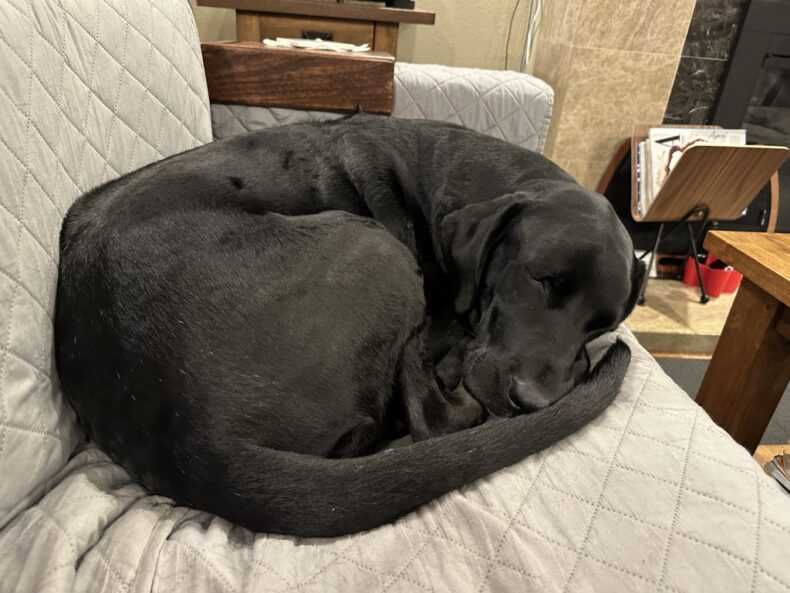
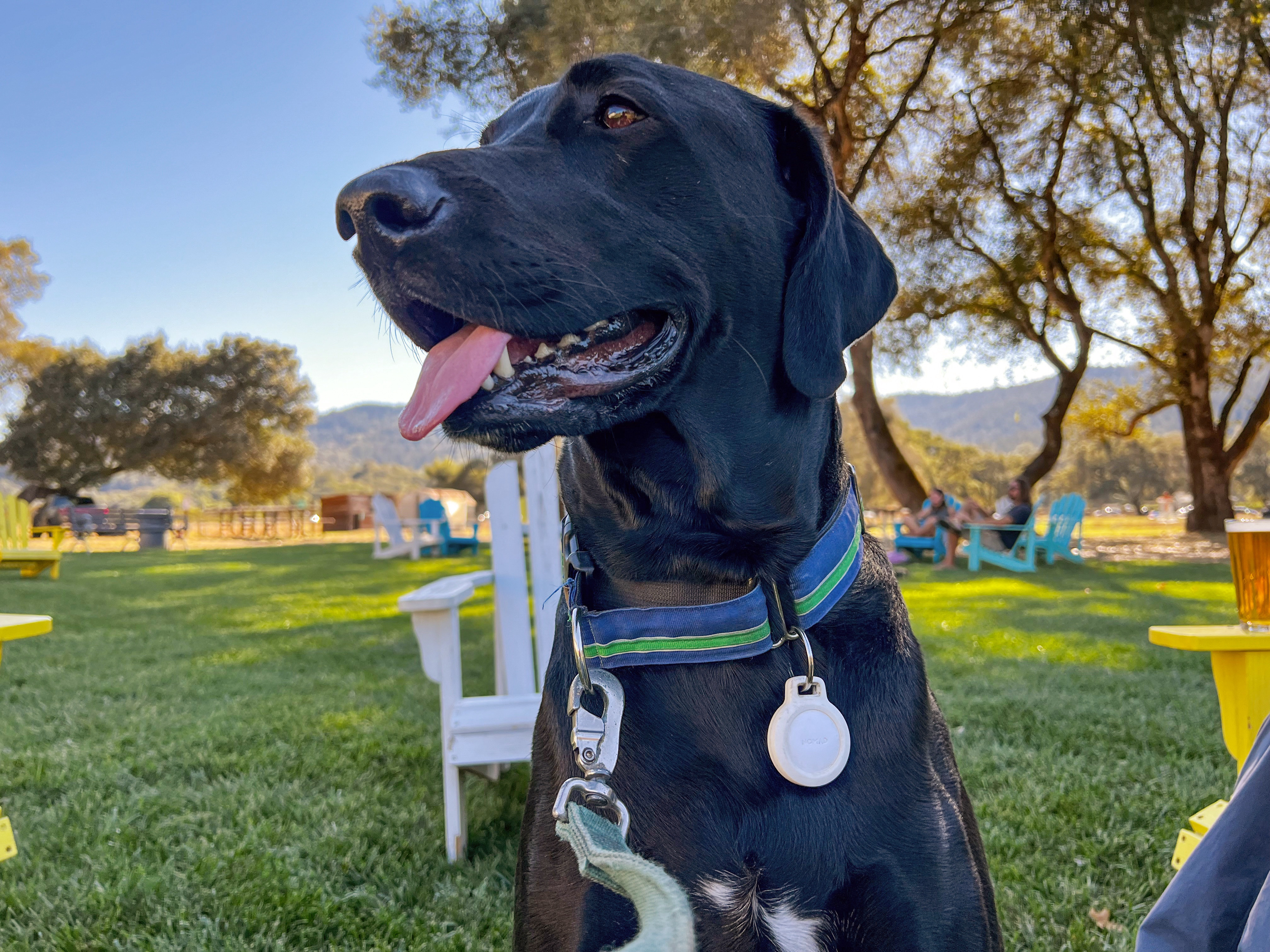
We certainly consider Rooney, a 105-pound, 5-year-old black Labrador–ridgeback mix, to be an important member of our family. And we’re not alone: according to a 2023 Pew Research Center survey, of the 62 percent of Americans who have an animal in their household, 97 percent say those animals are part of the family. And 53 percent of those who share their lives with dogs consider them to be as much a member of the family as the humans.
These numbers are striking, but probably not surprising to anyone with a companion animal, or anyone who knows someone with a companion animal.
What is surprising is how out of step the law is with society on this matter. In the United States, and many other countries, dogs are legally property. For the most part, the law treats them the same way it treats furniture. While all the states do have animal protection laws that ban cruelty, those laws are uneven, generally weak, and rarely vigorously enforced.
Years ago, while reading a story about a woman in Texas whose dog was killed, I learned that if somebody accidentally, or even intentionally, kills your dog, the damages you are entitled to recoup are limited to the monetary value of the dog — either the money you spent to acquire the dog, or the cost to “replace” the “property.” I was struck by the glaring mismatch between how most people value their animal companions and how the law values them.
So I was very interested to learn that a judge of the New York State Supreme Court decided that a family was entitled to seek mental, emotional, and psychological damages suffered from traumatically losing their dog due to someone else’s negligence. This is a ground-breaking decision that goes against precedent, and I wanted to understand how the judge came to this conclusion. So I read his 19-page decision through to the end. I found it fascinating.
Here are some highlights:
The case
A woman named Nan DeBlase was walking Duke, her son Trevor’s 7-month-old Dachshund, in July 2023. As they were crossing the street at a four-way-stop intersection, a man ran a stop sign and turned left without a signal into the crosswalk that Nan was about half way across. She saw him coming at the last second, and both she and Duke ran toward the sidewalk. Duke didn’t make it.
The judge decided the driver was solely responsible for the accident, which meant he should compensate Nan and Trevor $1,500 for Duke (presumably the amount they spent to purchase him) and $479.84 in vet bills.
But the plaintiffs also asked to recover personal damages under the theory of “negligent infliction of emotional distress,” and specifically Nan’s “emotional and psychological injury resulting from the wrongful act of Defendant as she observed the striking of the dog, was physically present in close proximity of the dog, and was additionally in reasonable fear and danger of being struck herself.”
The defendant asked that this claim be thrown out because in New York, pets are considered property, and the state limits damages to “the value of the pet at the time it died.” His lawyers grounded their argument in a 2021 “landmark decision” in Greene v Esplanade Venture Partnership that expanded the definition of “immediate family,” which was traditionally limited to parent-child and spousal relationships, to include a grandmother who witnessed the death of her granddaughter. In that case, the important points for inclusion as immediate family were the grandparent’s participation in the raising of the child and “powerful emotional bond” with the child.
They also cited the 1993 decision in Trombetta v Conkling in 1993 which explicitly declined to expand the definition to include every bystander that had a significant emotional attachment to the victim in order to avoid a “narrow avenue” from becoming a “broad concourse” and “limit the legal consequences of wrongs to a controllable degree.” Therefore, the defendant’s lawyers argued, allowing Duke to be considered immediate family “would be contrary to public policy.”
Lawyers for the plaintiffs countered that “current law is outdated and inconsistent with legal trends. Dogs are cherished members of the family and, according to Plaintiffs, can no longer be classified as mere personal property as such is not in line with how society views family dogs.” They argue that New York law has already begun to evolve with respect to pets, pointing to a 2021 amendment to the Domestic Relations Law requiring the court to consider the best interests of a companion animal when deciding who gets custody in a divorce.
They also noted that in the Greene decision, the judge was reluctant to redefine the law but also stated that “roles and perspectives change, and that what once was accepted as a basic social premise has to be carefully examined in a way that reflects the realities of our lives.”
The judge’s decision
The most interesting part of this document starts 12 pages in when the judge, the Honorable Aaron D. Maslow, delves into the philosophical and legal questions at the heart of the case. “Courts often find themselves at a crossroads, faced with the decision to uphold traditional law or facilitate its evolution,” he begins.
On one side of this tension is the doctrine of stare decisis, which basically says that common-law decisions should stand as precedents for future cases. On the other side, he continued, “when legal recognition of a special status, societal views, common sense, and public policy suggest a different approach, courts may adjust the interpretation of law to align with shifting societal norms.”
“Hence, courts face the challenging balancing act of interpreting and applying law to align with evolving societal norms while remaining faithful to the original intent of the law,” he writes. “This is precisely what this Court sets out to achieve.”
One aspect of the case at hand rests on what’s called the “zone of danger” rule. Generally, bystanders cannot make claims for emotional distress due to witnessing an accident. The exception in New York is if the bystander was at risk of physical injury or death, suffered an emotional injury from witnessing the accident, and the victim was an immediate family member.
Trevor DeBlase, the dog’s owner, does not qualify because he was not at the scene. But there was a doorbell camera video of the accident, which is low-res but clear enough to leave no doubt that Nan meets the first two criteria in this case (the video is heartbreaking, I don’t recommend looking it up).
The question at the heart of the case is whether a dog can be legally classified as immediate family. The judge makes these points:
- New York’s legal framework concerning household pets has significantly evolved from treating them as mere property.
- New York already requires the best interests of companion animals to be considered in custody cases, allows people to create trusts for the care of their pets, and has enacted a variety of laws aimed at reducing abuse and suffering (e.g. banning puppy mills and cat declawing).
- This shift in legal recognition reflects a shift in societal norms (evidenced by changes such as allowing pets in hotels and in the main cabin of planes).
- The expansion of immediate family in Greene seems to have been shaped by society’s perception of a grandparent’s role.
“Thus,” the judge writes, “considering the various accommodations made for companion animals in general, along with the deep and affectionate bond Plaintiffs shared with their dog, it stands to reason that companion animals, like Duke, could also be recognized, as a matter of common sense, as immediate family.”
But he is careful to describe the decision as a “carve-out” to the zone of danger rule that requires that the pet is leashed to the person at the time of the accident and that the person is also exposed to physical danger. This effectively excludes, for the most part, pets other than dogs. It also excludes situations where people were devastated by the death of their pet but not terrified for their own safety. In other words, it doesn’t expose vets or other animal service providers to liability.
I’ll end with one thing the judge wrote that I think sums up how far from societal norms the law was (and still is in most of the country): The court believes that “a pet such as a dog is not just a thing.”